




Key Takeaways
This DL Research report, in collaboration with YO, examines the evolution of yield optimizers from Gen 1 to today’s rising Gen 3 architecture. Below are some key takeaways from the report:
- DeFi yield is still complex and inefficient. Users face high friction from bridging, unstable returns, and opaque strategies, while institutions cite operational complexity and lack of risk clarity as barriers to participation.
- Early yield aggregators set the foundation. Gen 1 vaults introduced a single strategy on a single chain, Gen 2 allocators broadened the strategy but remained in a single chain, and DeCeFi models unlocked more advanced strategies but reintroduced trust in curators and off-chain execution.
- A new Gen 3 architecture is emerging. Gen 3 protocols are built on five core pillars—security, transparent risk, crosschain allocation, simple UX, and algorithmic optimization—setting the foundation for sustainable, scalable yield.
- YO demonstrates Gen 3 in practice. With $80M TVL across yoETH, yoUSD, yoBTC, and yoEUR, YO delivers diversified, risk-adjusted yield through ERC-4626 vault tokens, automated crosschain rebalancing, and full onchain transparency.
- YO is gaining traction as financial infrastructure. Vaults have produced stable, competitive returns, and yoTokens are already integrated across major DeFi protocols and wallets, positioning YO as both a yield optimiser and a composable building block for the next phase of DeFi.
Introduction
The concept of “yield farming” became popular during the summer of 2020. During this period, which was widely regarded as a turning point for Decentralized Finance (DeFi), the ecosystem experienced a spike in popularity as users flocked to protocols for a variety of financial services without the need for middlemen. For the first time, users could earn triple-digit yields simply by depositing assets into decentralized apps, fueled by token incentives and airdrops that rewarded early adopters. This rush of activity triggered a boom in lending, borrowing, trading, and liquidity provision, with returns that far outpaced anything in traditional finance.
But five years later, the picture looks different. DeFi has endured several boom-and-bust cycles in step with the broader crypto market, yet it has never regained the heights of the 2021 bull run, when total value locked (TVL) in protocols topped $175 billion. Meanwhile, the overall crypto market cap has grown over 40% since its 2021 peak to over $4 trillion in 2025 yet DeFi TVL has remained stagnant at around $160 billion. The crypto sector as a whole gained over $1 trillion in incremental value, yet almost none of that flowed into DeFi.
So what went wrong? Many DeFi yields proved unsustainable, driven by short-lived incentives or demand for leverage. Users were forced to constantly chase “the next best thing” to maintain returns. Worse, many high- yield opportunities came with hidden risks like opaque strategies, weak economic designs, and a string of high- profile exploits that drained user funds. Together, these factors eroded trust and left many with a lasting sense of disillusionment toward DeFi.
The UX Problem
The DeFi Yield Maze The search for yield has long shaped how money is invested. Whether in traditional savings accounts or through professional asset managers, investors are guided by the promise of returns.
In traditional finance, earning yield is simple: deposit into a savings account or hand funds to a manager, and returns accrue automatically. In DeFi, the process is far more complex. Capturing yield means choosing between lending, liquidity provision, staking, or other strategies, often across multiple chains, each with its own risks and costs.
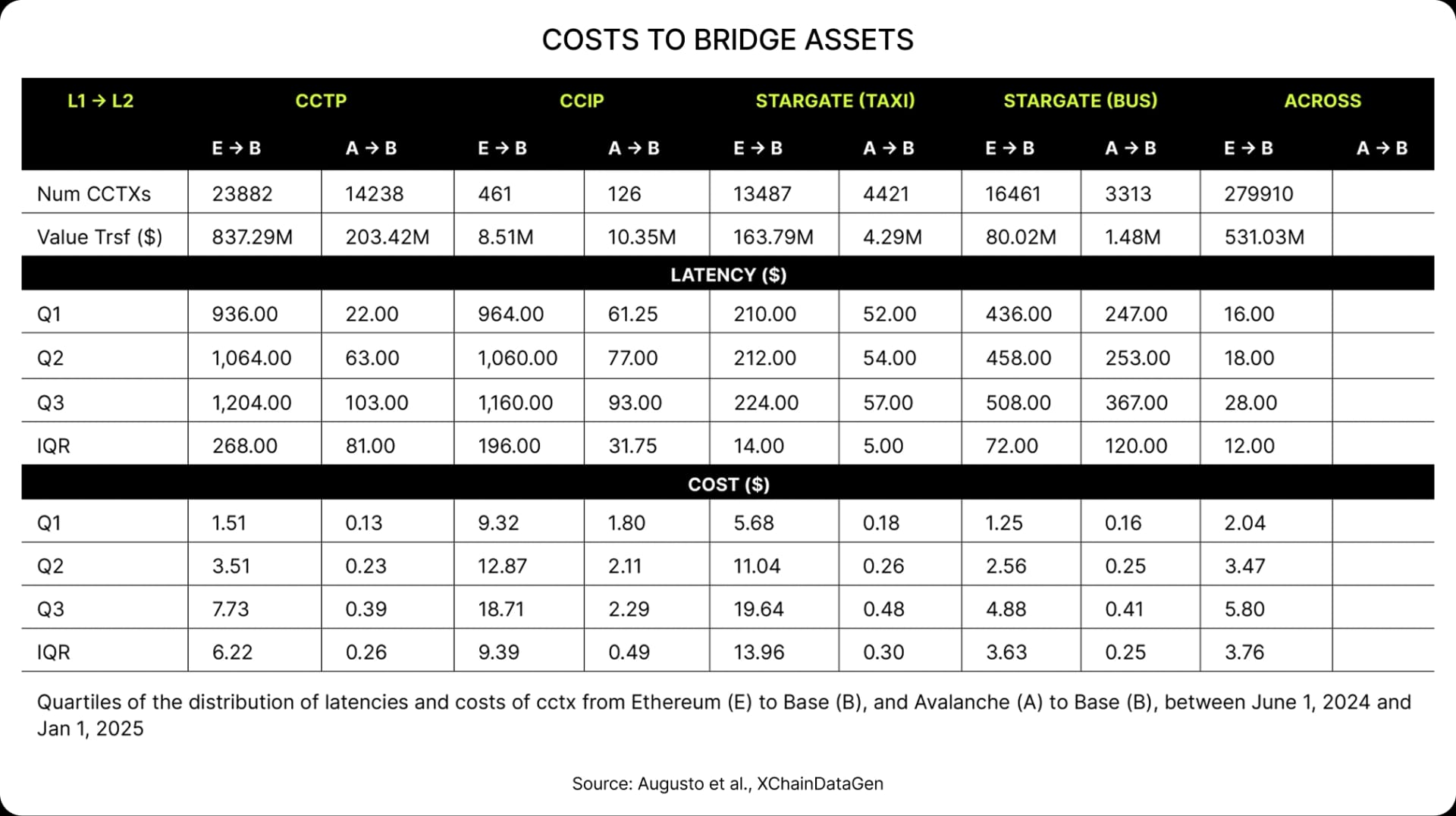
A study published in March 2025 (Augusto et al., XChainDataGen) highlighted this problem. Moving assets from Ethereum to Base carried median fees between $2.56 and $12.87, while transfers from Avalanche to Base cost between $0.18 and $1.80, depending on the bridge. On their own, these charges may seem small, but repeated over time, they steadily eat into the yields users expect to capture.
When costs, complexity, and lack of transparency stack together, they do more than frustrate retail users. They also limit broader participation in DeFi. An EY–Coinbase survey of more than 350 institutional investors found that while 83% plan to increase allocations to digital assets in 2025, only 24% currently participate in DeFi. Derivatives, staking, and lending were cited as the most common entry points, while yield farming ranked much lower, with only 27% expressing interest.
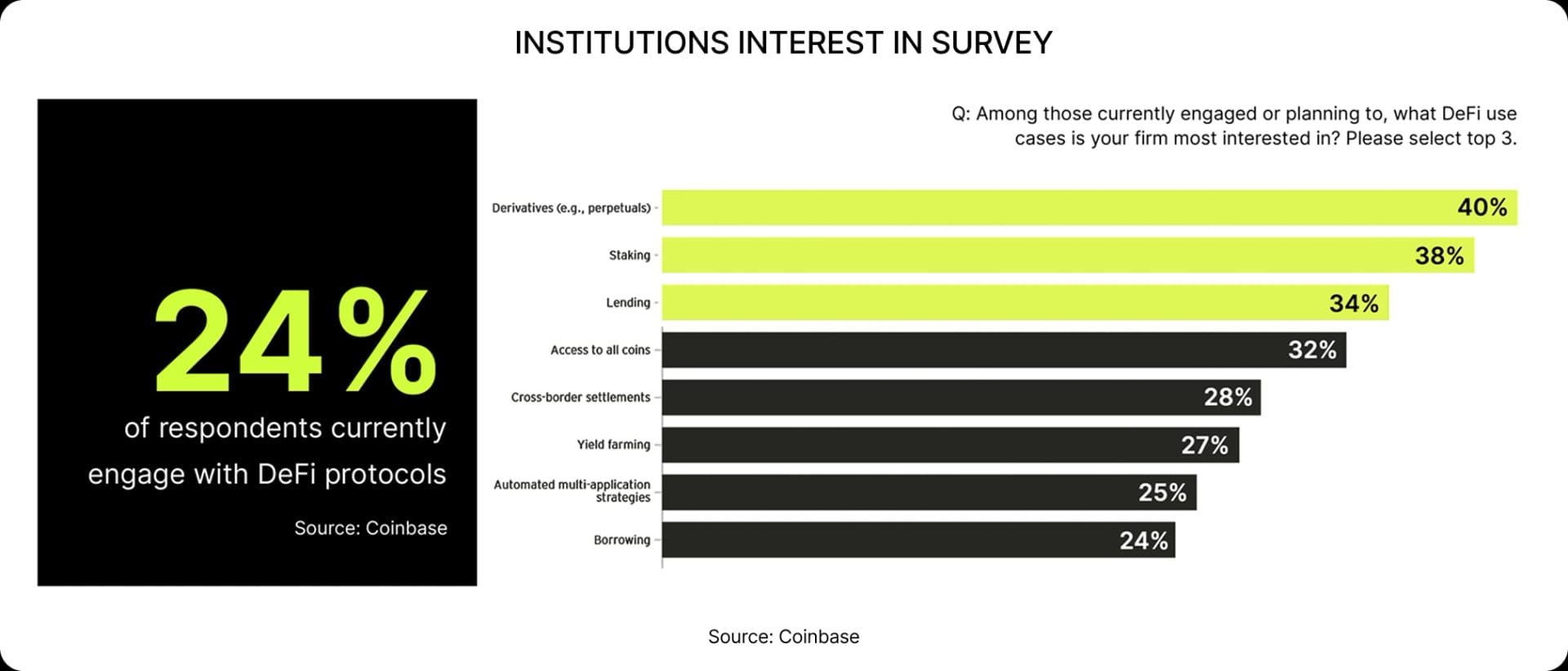
If more than 70% of institutional investors are unable to engage with DeFi today, it is clear that something needs to change. The demand is there, but without reducing complexity and barriers, most investors will remain on the sidelines.
Gen 1: The First Wave of Yield Optimisers
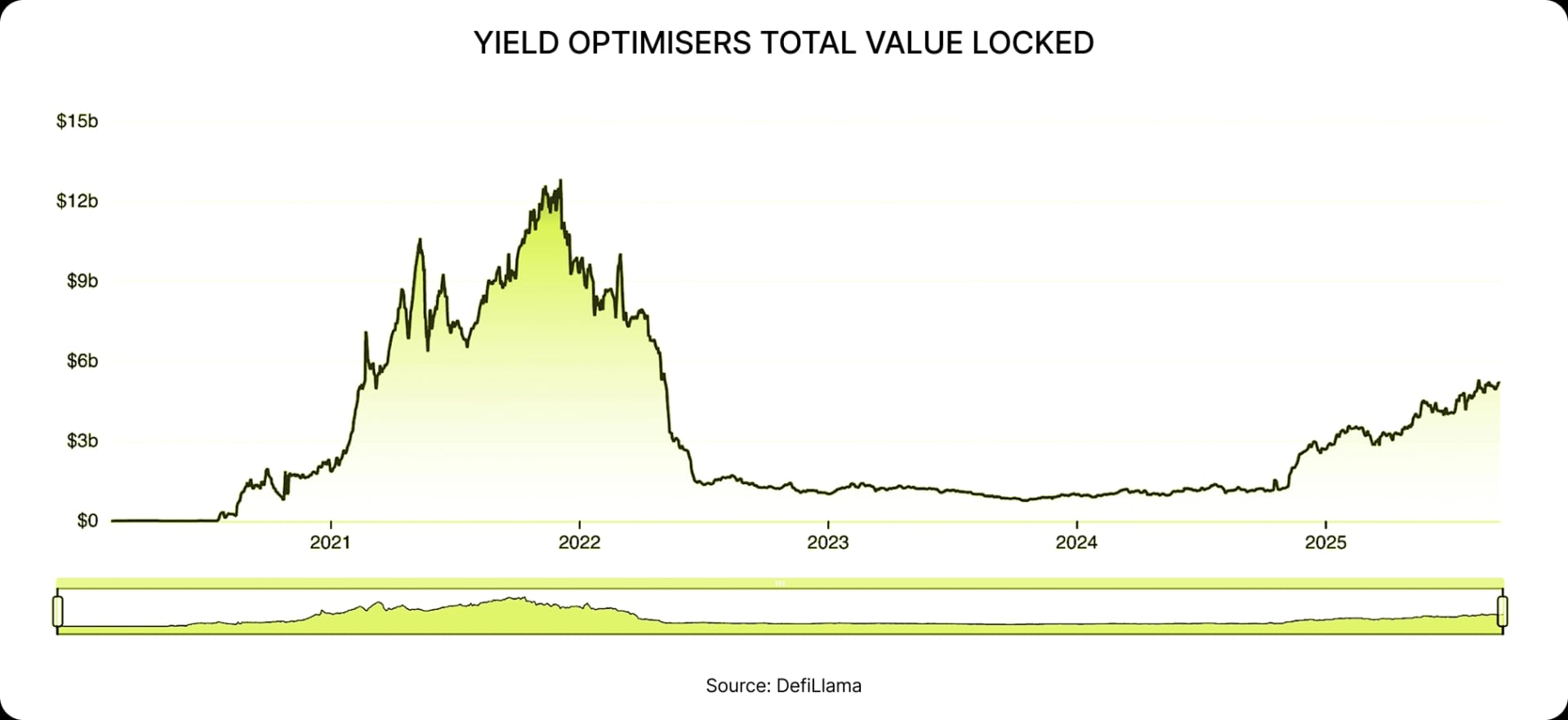
Yield optimisers were introduced as the first real solution to the DeFi yield maze. Instead of manually chasing opportunities across protocols and chains, users could deposit once into platforms like Yearn Finance, Beefy, or BadgerDAO and let automated strategies do the work. In 2021, they seemed to achieve a clear product–market fit, with TVL climbing from $1.8 billion in January to $12 billion by November.
That momentum, however, did not last. Today, yield optimisers hold under $5 billion in TVL, while DeFi overall retains around $150 billion compared to a $175 billion peak. The sharper relative decline suggests that something specific to optimisers, rather than market cycles alone, held them back.
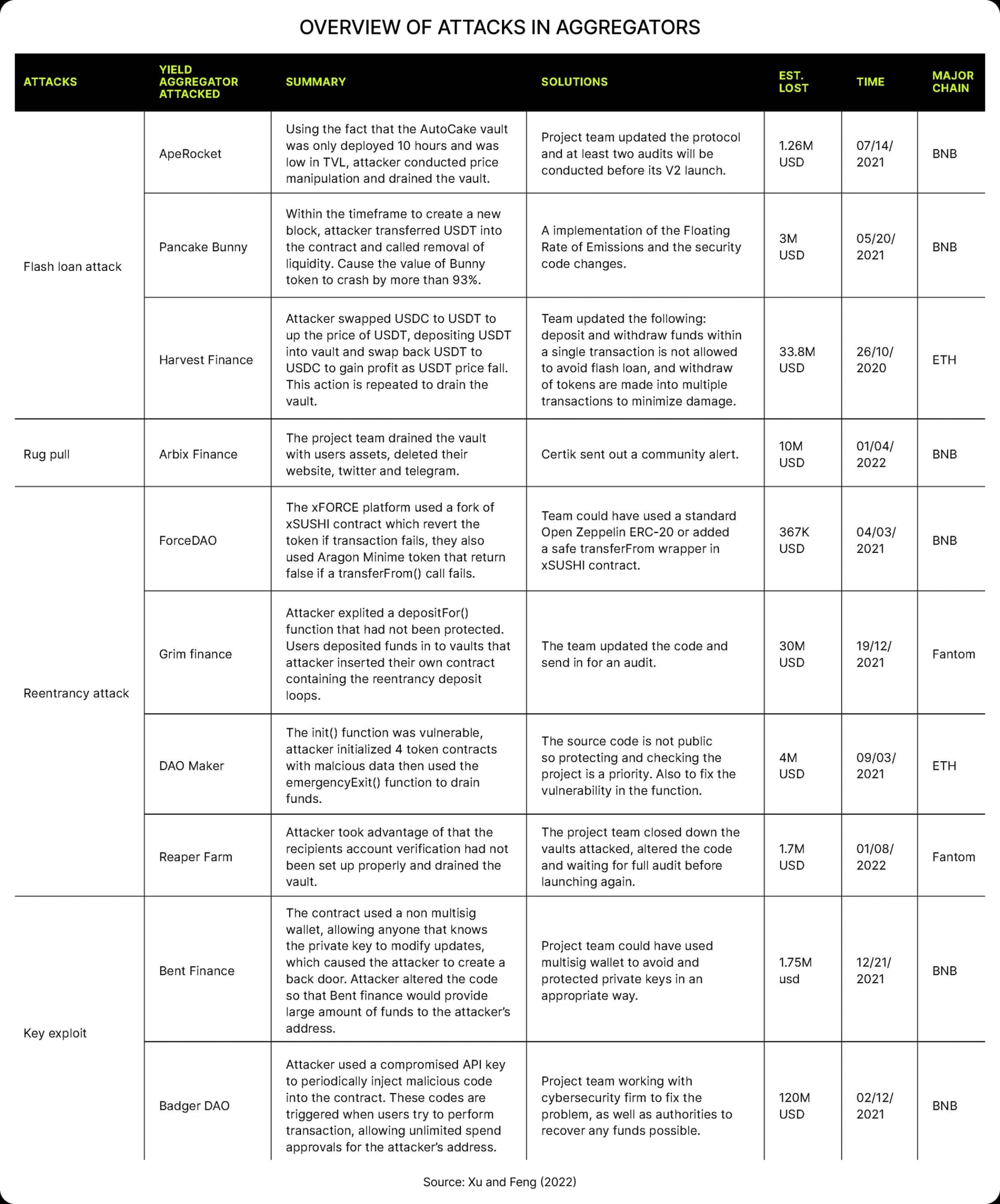
One reason was a series of high-profile security failures. In October 2020, Harvest Finance lost $33.8 million to a flash loan exploit. In December 2021, Grim Finance was drained of $30 million through a reentrancy attack. That same month, BadgerDAO suffered one of the largest incidents in the sector when a compromised API key was used to steal $120 million.
Xu and Feng (2022) note that these attacks often stemmed from weaknesses in vault design, composability, or access controls. What was meant to simplify yield instead introduced new points of failure, leaving many users hesitant to commit further capital.
But security was not the only factor. Even when protocols functioned as intended, their economic design created challenges that made it hard to sustain users over time. Xu and Feng (2022) highlight several recurring risks, all observed in practice:
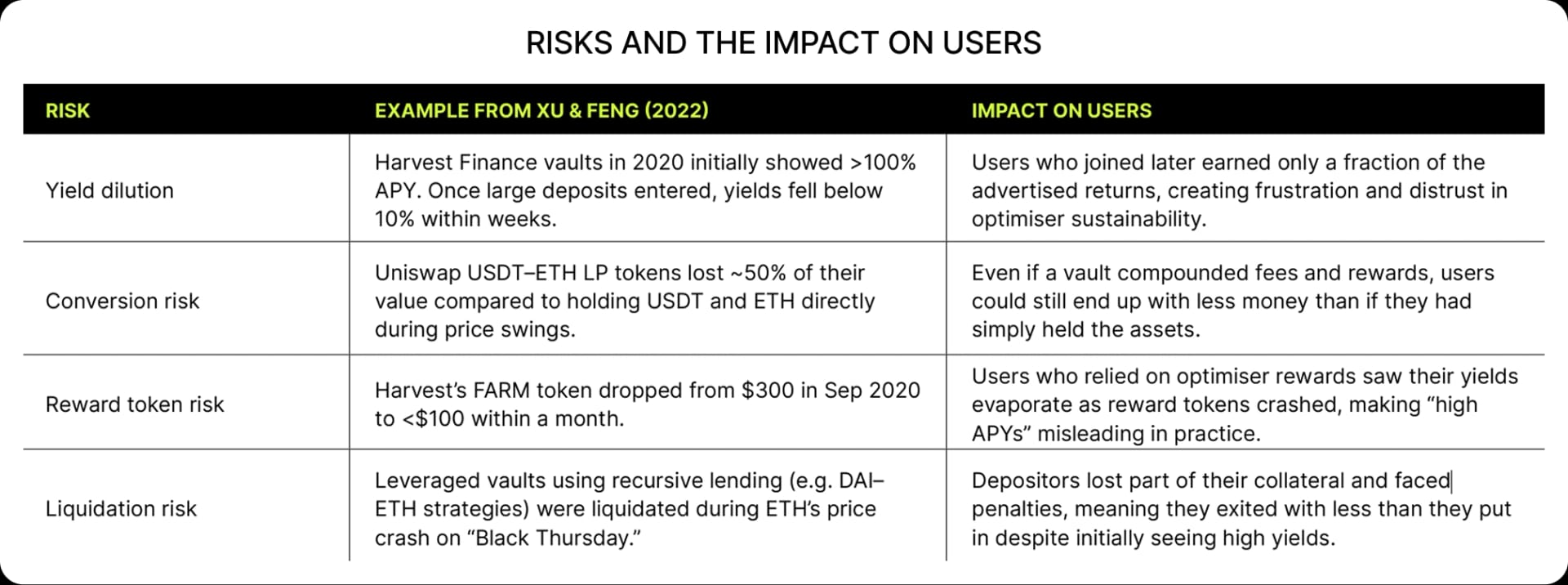
Xu and Feng’s analysis shows that these risks were not theoretical. They appeared again and again in live strategies. Yield optimisers set out to reduce complexity, but in practice they introduced new risks and relied on weak economic designs that eroded trust. As a result, the sector did not recover at the same pace as the rest of the DeFi market.
Yearn
Out of the Gen 1 yield optimisers, one protocol that remains relevant and innovative is Yearn Finance. With $558M in TVL, it ranks third in the yield optimiser category.
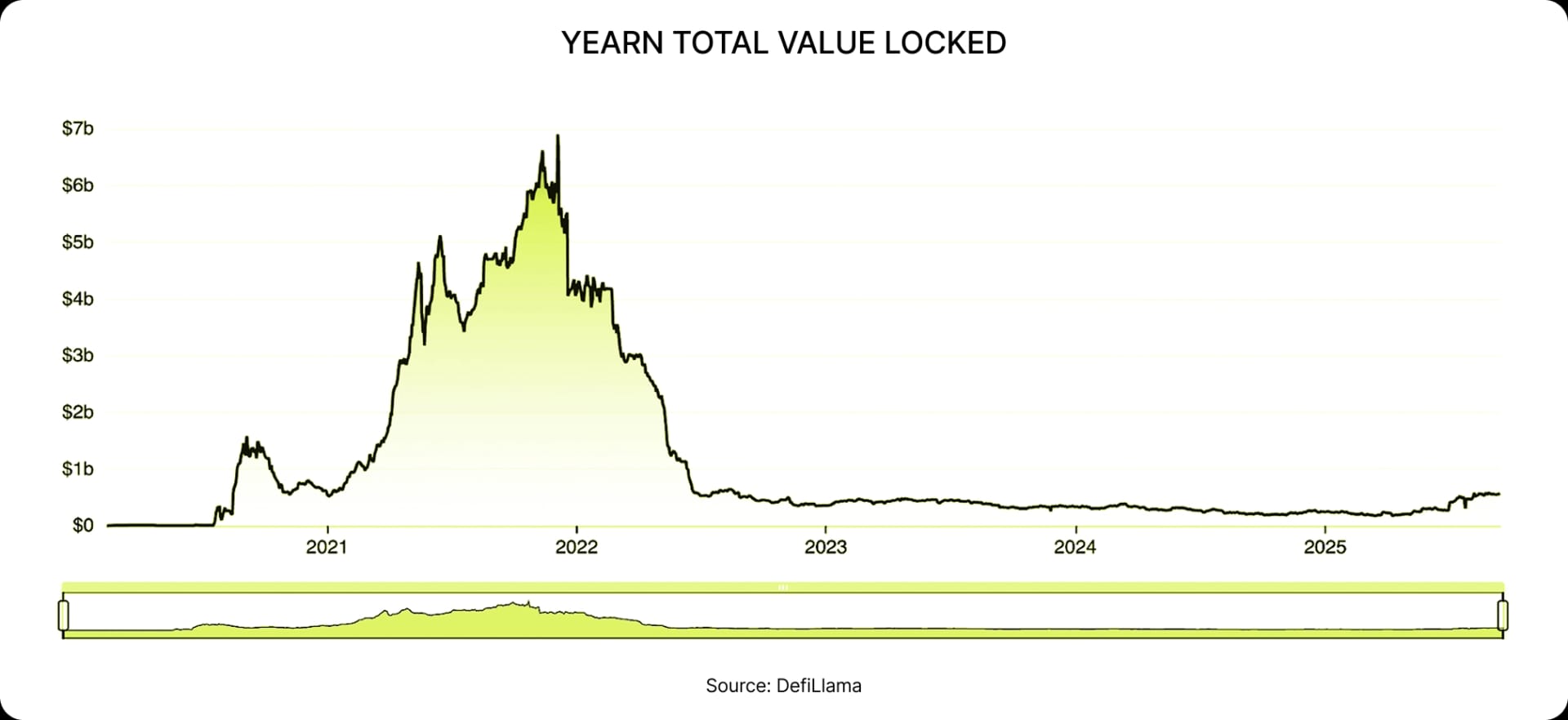
In 2024, Yearn launched its V3 upgrade, a meaningful step forward from its earlier architecture. At the core of V3 is a vault system where users can deposit assets (for example, USDC on Ethereum) into either a single-strategy or multi-strategy vault. These deposits are then deployed across various venues on the same chain. In return, users receive an ERC-4626 token, a standardised tokenised vault share that can be freely integrated and used throughout DeFi.
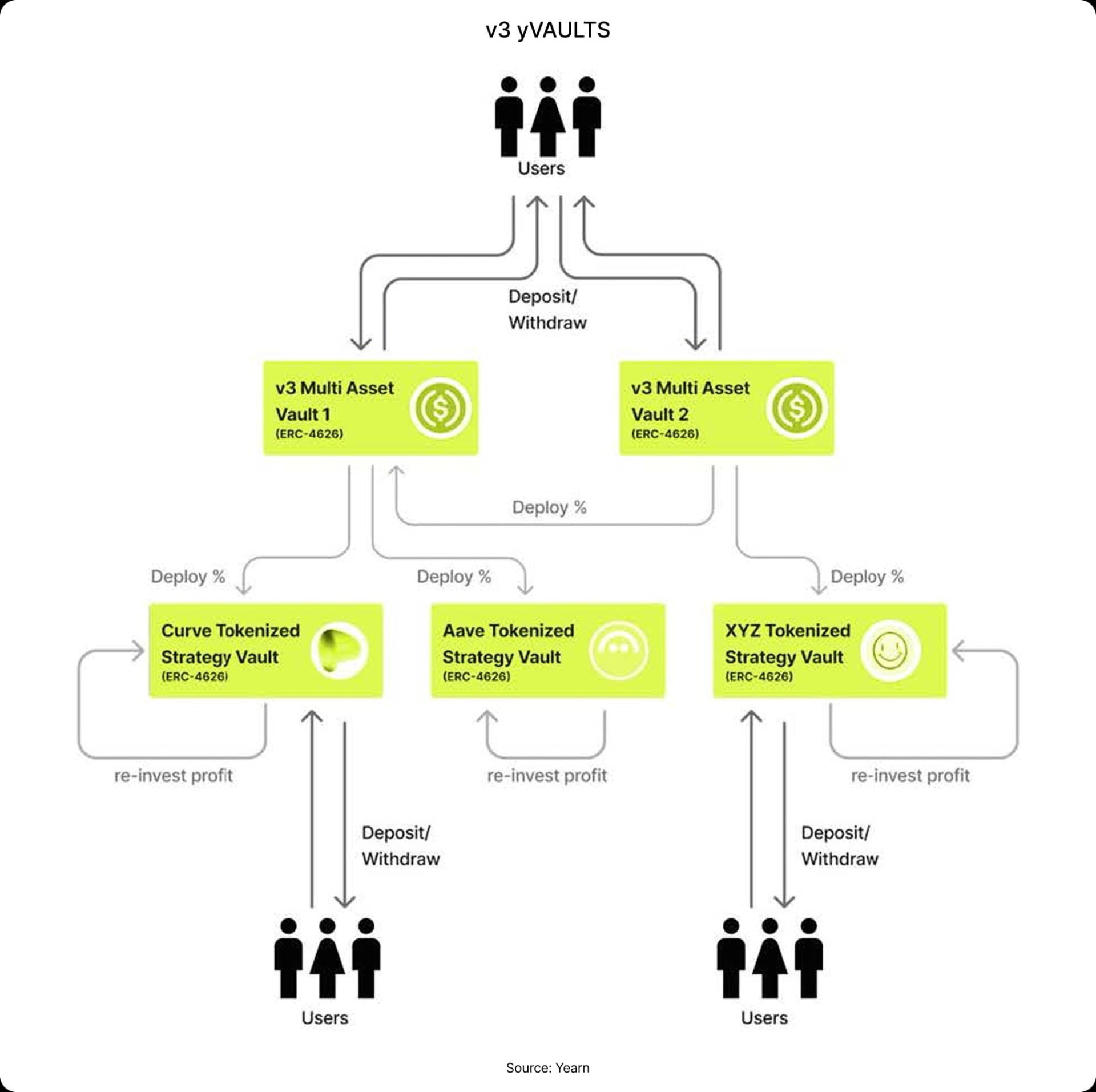
While this design marks a notable improvement, especially compared to Yearn’s earlier bespoke structures, the platform still does not fully address the DeFi yield maze. Strategies remain chain-bound, and the scope of each vault is relatively narrow. Across most of Yearn’s vaults, capital tends to concentrate heavily in a single or a handful of strategies.
When we look at Yearn, its strengths and weaknesses can be summarised as follows:
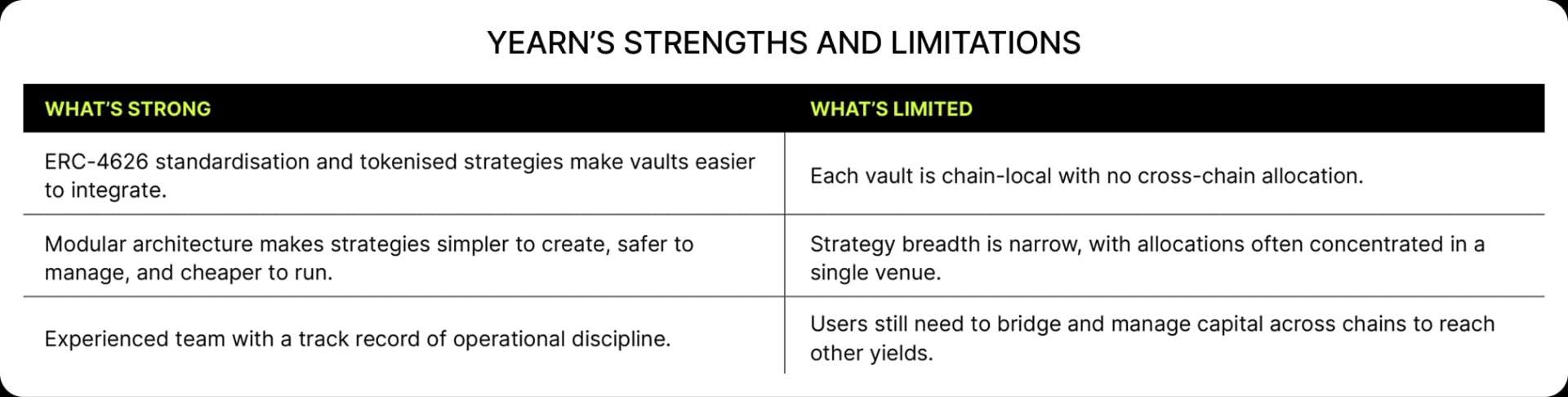
Yearn Finance has made important progress since the early Gen 1 yield optimisers, introducing ERC-4626 vaults and allowing deposits to be spread across multiple strategies instead of just one. This makes Yearn more flexible than its original design.
Still, it does not fully solve the challenge of navigating DeFi yields. Vaults remain tied to a single chain, limiting opportunities and driving users to bridge assets to access yield elsewhere. Strategy choice is also narrow. For example, the USDC vault on Ethereum lists eight strategies, but only three are active and over 90 percent of funds sit in one.
In the end, Yearn Finance has advanced on its original model but still reflects the Gen 1 framework.
Gen 2: Cross-Protocol Allocators
After the first wave, a new set of yield optimisers emerged that widened the menu of strategies and improved the user experience. Rather than a single vault routing to a handful of venues, Gen 2 products scan multiple protocols, rebalance on users’ behalf, and issue cleaner, standardised receipts. This raises the floor on convenience and strategy quality compared with Gen 1.
A key limitation remains. Most Gen 2 systems deploy funds on the same chain where the user deposits. They broaden choice within a chain but do not give effortless access to the best yields across chains. Users still need to bridge if the optimal venue sits elsewhere.
Tokemak
Tokemak’s Autopilot is a clear example of a Gen 2 approach. Users deposit into Autopools, which represent a curated set of destinations such as lending markets or DEX liquidity pools. Once funds are deposited, Autopilot continuously monitors metrics like APR stability, trading fees, slippage, and gas costs to determine whether liquidity should be rebalanced. This creates a system of reactive liquidity that adapts as market conditions change.
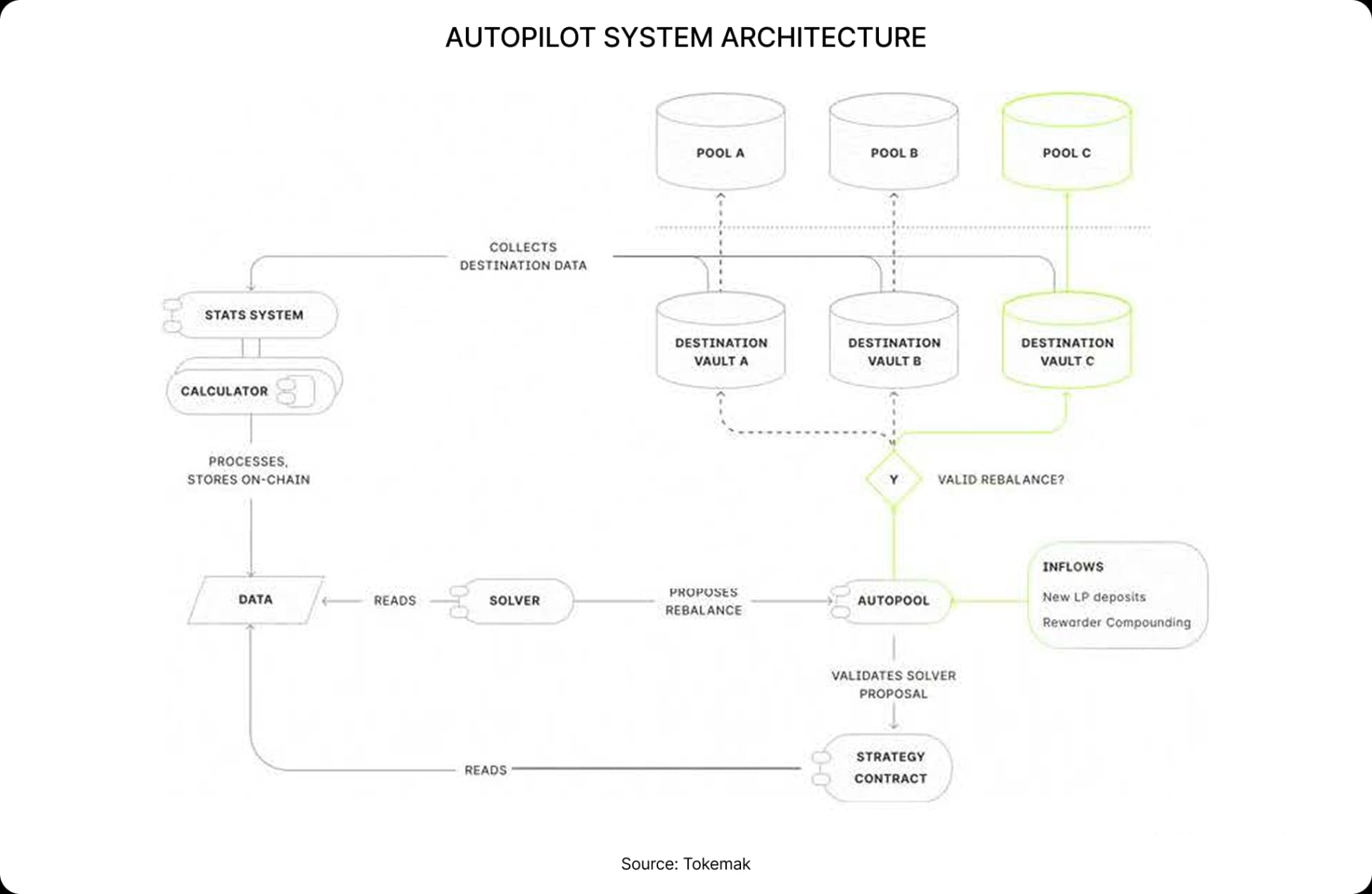
In practice, this means an ETH depositor receives a yield-bearing token such as autoETH, while Autopilot handles all the complexity of compounding rewards, rebalancing between pools, and minimising costs.
For stablecoins, Tokemak has launched autoUSD, which deploys across lending protocols (Aave, Morpho, Fluid), DEXs (Curve, Balancer), and yield-bearing assets (sUSDe, sFRAX, scrvUSD). As yields shift across these venues, Autopilot reallocates autonomously to maintain performance.
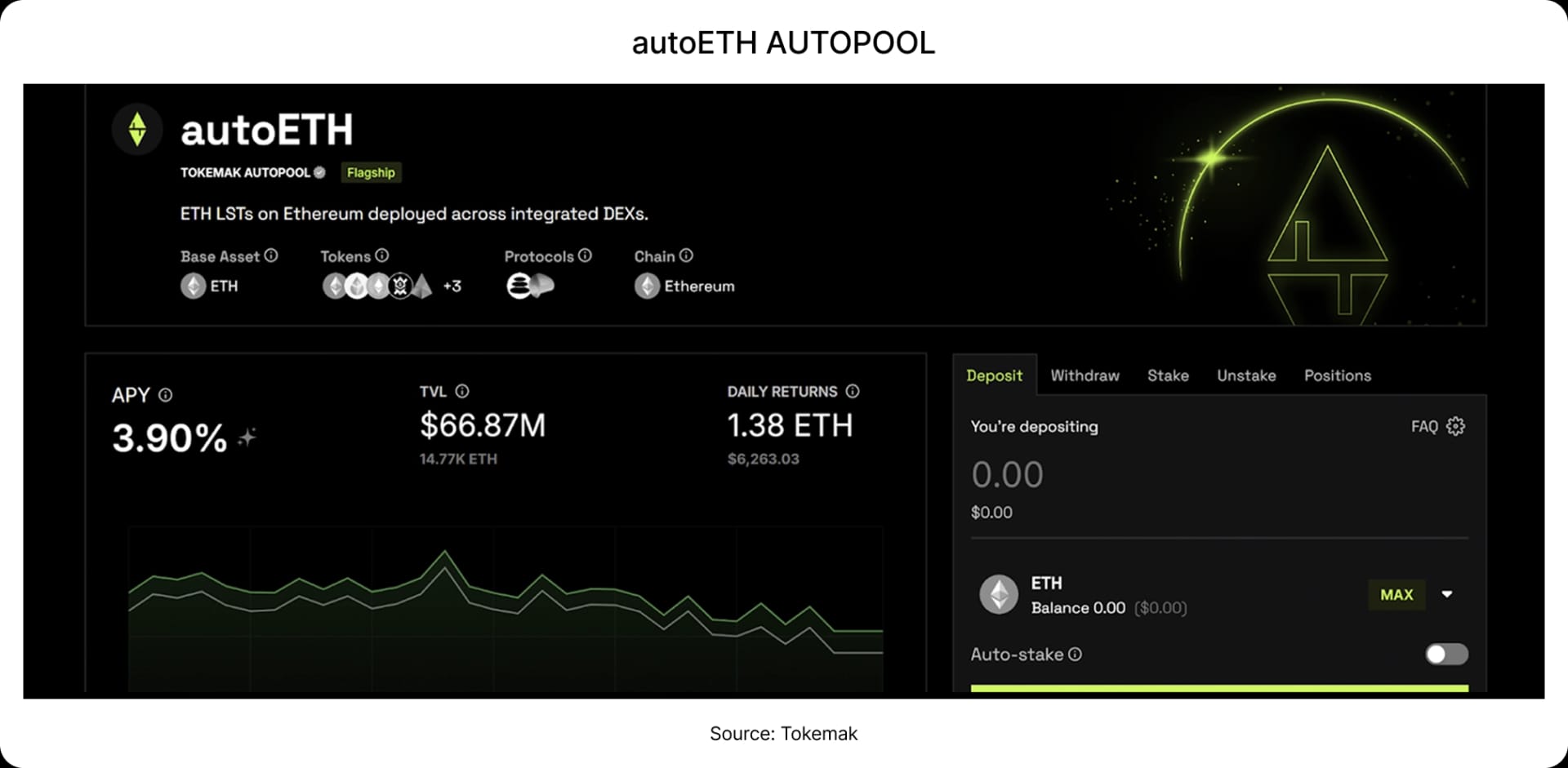
This marks a significant evolution from Gen 1. Instead of a static vault tied to one or two venues, Autopilot creates a flexible layer that abstracts the decision-making process.
However, despite these advances, Tokemak is still confined to chain-local deployments. If the best stablecoin yield sits on another chain, users must bridge and enter a different Autopool there, reintroducing friction.
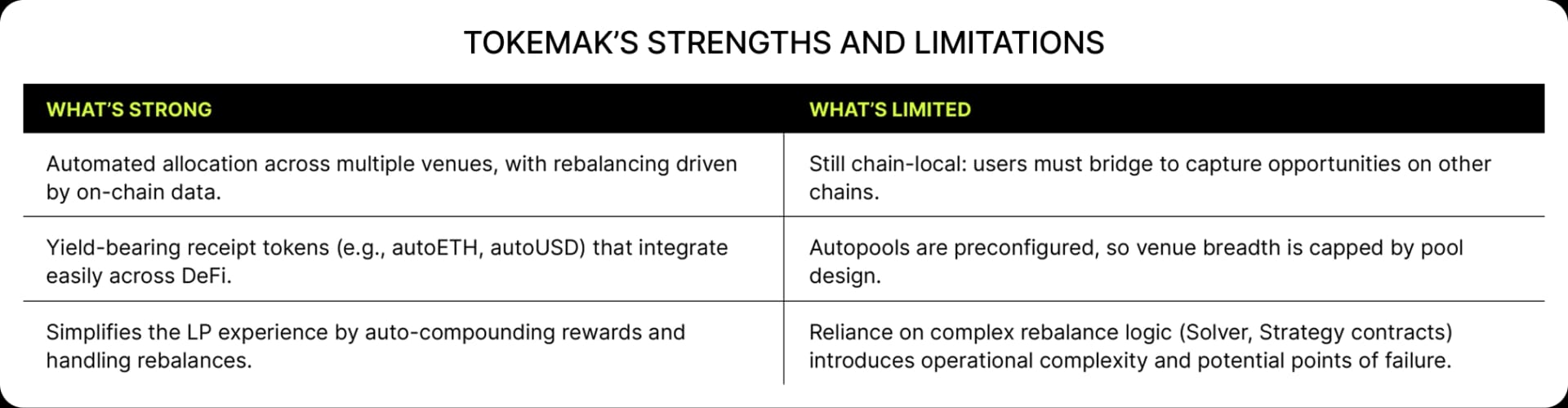
Tokemak improves on Gen 1 by widening strategy breadth within a chain, automating rebalancing, and simplifying the LP experience through receipt tokens. Yet it still leaves users with the same core challenge: opportunities remain chain-bound, and capturing yield elsewhere requires bridging and interacting with new pools.
Superform
Superform is another example of a Gen 2 optimiser. Its design is built around Superform Core, which uses modular hooks to combine actions such as lending, staking, or looping into a single on-chain flow. On top of this sits the Superform Periphery, which introduces SuperVaults and SuperAssets.
SuperVaults are vaults that run strategies defined through hooks and publish deterministic price-per-share updates. Strategists can create and manage these vaults, but their operations are subject to predefined rules and timelocks.
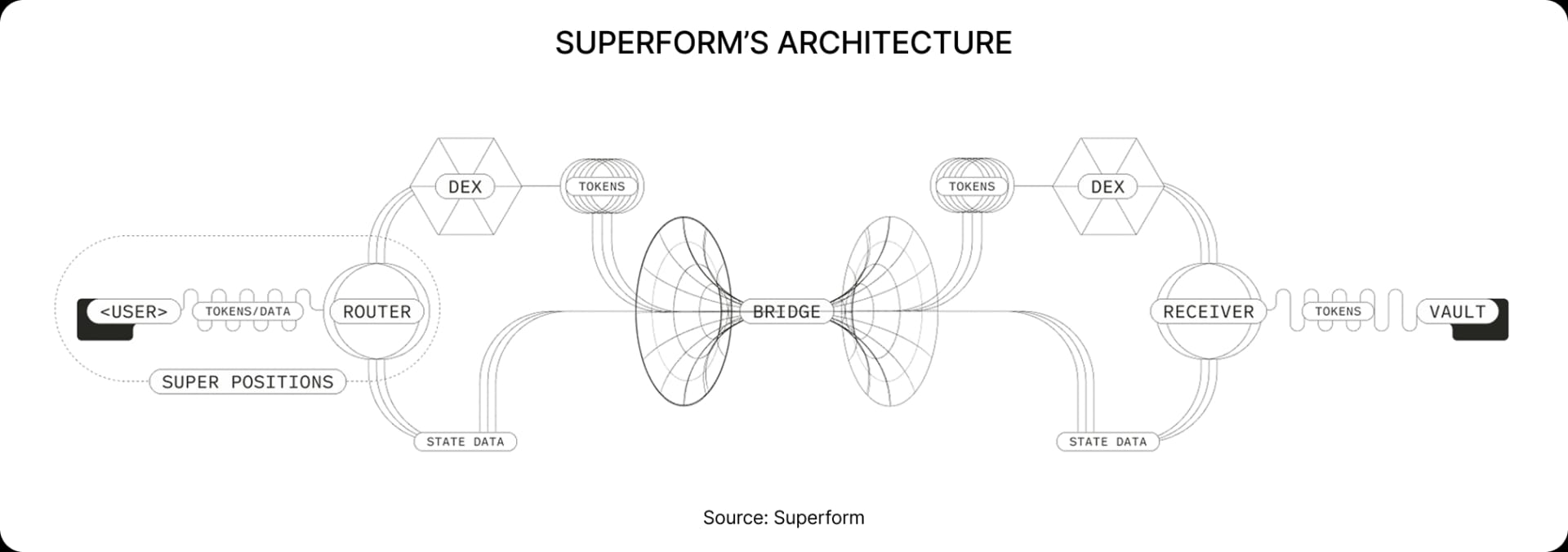
For users, SuperAssets such as SuperUSDC are designed to act as savings tokens that combine yield from multiple SuperVaults. However, in practice, Superform remains chain-local. Users deposit on a single chain, and yields are generated only within that environment, meaning they still need to bridge to access opportunities on other networks.
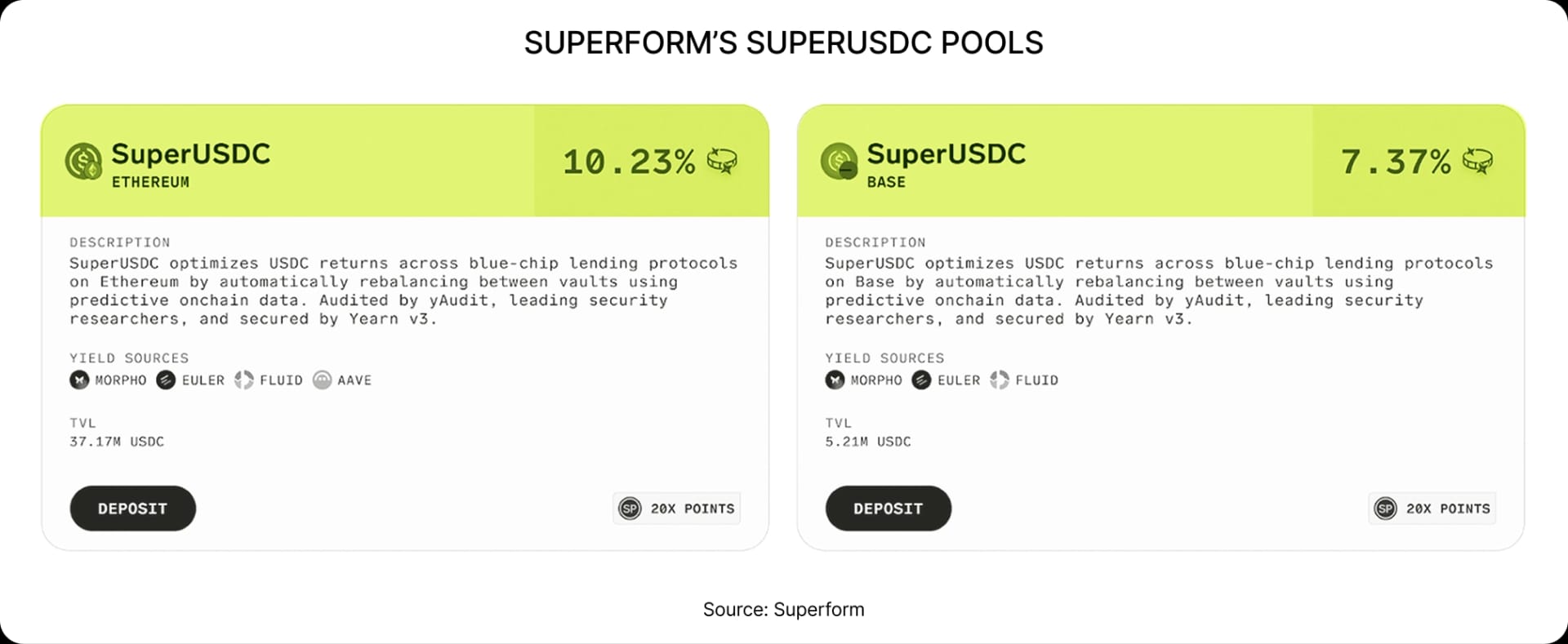
With Superform v2, which recently went live on mainnet but is not yet publicly accessible, the protocol aims to improve this model. V2 introduces validator-secured vaults, omnichain SuperAssets, and one-signature execution flows. The vision is to make cross-chain allocation native and automatic.
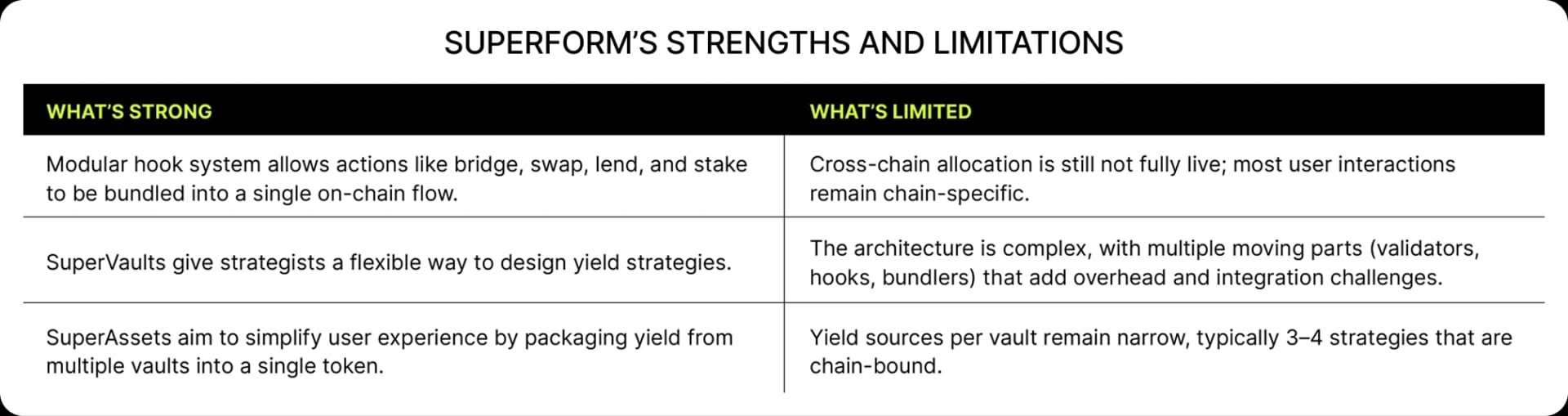
Superform introduces more advanced infrastructure than earlier generations, with validator-secured vaults, modular execution, and user-facing assets designed for omnichain yield.
However, in its current form, most vaults remain limited to a few strategies on a single chain, meaning it does not yet deliver the seamless crosschain access needed to guide users through the broader yield maze. With Superform v2 now live on mainnet but not yet open to the public, the model may improve on these limitations.
Download the full report here
Download the "Solving the DeFi Yield Maze: The Rise of Gen 3 Optimizers" report here (PDF)