




Executive Summary
Key Findings
- Edge over incumbents: Shaga delivers compute at the true edge through idle GPUs, achieving latency under 40ms and operating at a cost base twenty-six times lower than centralised providers.
- Dual revenue streams: By monetising synchronised gameplay data for AI training, Shaga turns a by-product into a high- margin asset, allowing gaming sessions to be subsidised and creating a compounding growth flywheel.
- Efficient and verifiable incentives: Unlike many DePIN projects, Shaga ties emissions to two concrete anchors: geography (via the H3 mapping) and measurable outputs. For infrastructure, rewards are tied to verifiable outputs such as electricity consumption, creating a clear link between real-world contribution and rewards. On the adoption side, incentives are directed to areas with potential and growth can be easily tracked through the activity and geolocation of Globbers and clients.
- Surplus potential at modest adoption: Even in a base-case scenario of 5% adoption of the underserved gaming market, gameplay data monetised at $5 per hour generates an annual surplus of $1.4 billion, demonstrating that sustainability and scale are achievable without extreme assumptions.
- Geographically validated growth: Our geospatial analysis highlights clear regional dynamics. Interest is strongest in Uganda, Indonesia, and India, while conversion ratios are highest in parts of Latin America, North Africa and a few key countries in Europe and Asia where early adoption is already translating into active usage. At the same time, node strains are emerging in Bangladesh and Nigeria, with similar pressures expected in some regions showing high conversion, such as Latin America, or strong interest, such as Indonesia and Uganda.
The Opportunity
Cloud gaming and artificial intelligence are two of the fastest-growing digital markets of the decade. By 2025, the cloud gaming industry is expected to generate $15.7 billion in revenues, with projections reaching up to $140 billion by 2032. AI training data, a less visible but equally critical market, is forecast to grow from $2.6 billion in 2024 to $12.7 billion by 2032. Both sectors face fundamental bottlenecks: cloud gaming suffers from high costs and limited coverage, while AI development is constrained by a shortage of annotated, high-quality datasets.
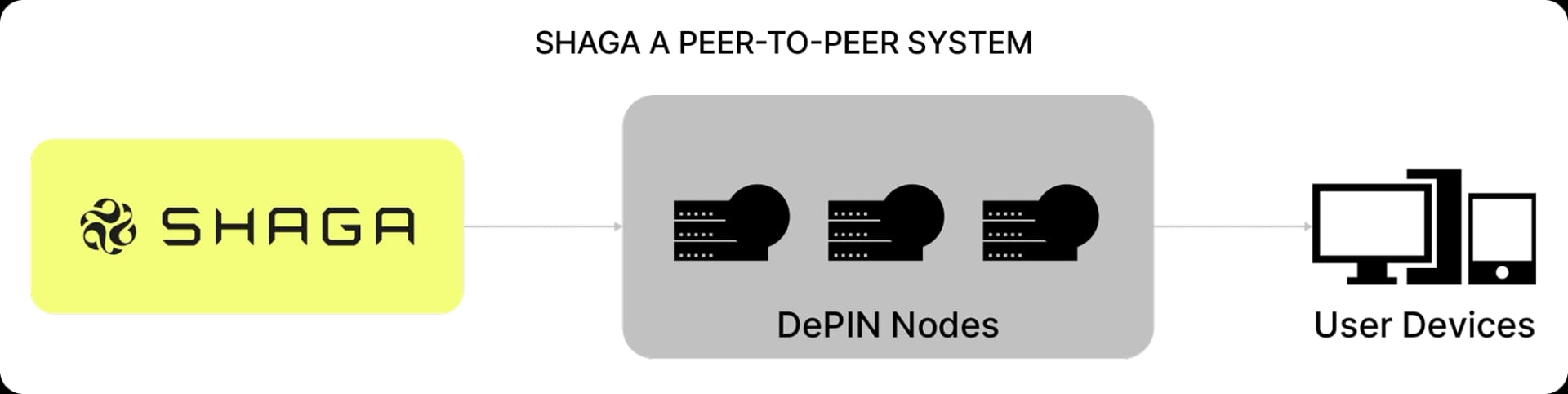
Shaga positions itself at the intersection of these two challenges. It transforms idle GPUs in everyday PCs into a decentralised edge network that can both power cloud gaming and generate high-value datasets. In doing so, it simultaneously reduces the cost of gaming infrastructure and creates a new revenue stream from AI data markets.
Technical Validation
Shaga’s architecture has already shown strong performance in practice. During beta testing, with more than 400,000 registered users and around 700 active nodes, the network achieved median round-trip latency of under 40 milliseconds in underserved regions, a level that outperforms many centralised providers outside major hubs.
A major strength lies in hardware diversity. The network spans everything from high-end RTX 4090 GPUs to older GTX 1050s and mainstream laptop CPUs. This inclusivity ensures both resilience and efficiency: high-performance devices take on compute-intensive workloads, while lower-power hardware supports lighter processes or off-peak demand. By leveraging the full spectrum of available devices, Shaga maximises utilisation and avoids reliance on a narrow class of machines.
Shaga also incorporates key innovations that enhance scalability. Neural Game Codecs reduce bandwidth consumption by up to 75%, making streams more efficient and affordable, while control bifurcation cuts multiplayer delay by as much as 45 milliseconds by routing inputs directly to game servers. Together, these features strengthen Shaga’s ability to scale effectively and position it as a credible alternative to centralised incumbents, for the latest stats, check glob.shaga.xyz.
Economics and Cost Advantage
The economics are equally compelling. Shaga’s base cost of operation is tied almost entirely to electricity consumption. At an average tariff of $0.20/kWh, running a 500W gaming rig equates to about $0.10 per hour, or just $0.025 per player-hour when concurrency is factored in.
In contrast, centralised providers operate with far higher overheads. AWS GPU instances are priced at roughly $0.52 per hour, while Xbox Cloud Gaming charges around $0.50 per hour on an effective usage basis. The result is a twenty-six-fold cost advantage for Shaga.
Rather than capturing this spread directly, Shaga monetises gameplay data. Synchronised video and input streams are uniquely valuable for AI training. Broker quotes range from $10 to $30 per annotated hour, with high-end cases reaching $100. Even at a conservative floor of $5 per hour, Shaga comfortably covers costs and generates surplus. One hour of data resale can subsidise multiple hours of free gaming, creating a powerful growth flywheel: more players produce more data, which drives more revenue, which lowers costs and attracts more users.
Adoption Signals and Geospatial Growth
Shaga’s ability to direct growth is reinforced by its H3 geospatial framework. Among the 220,000 Globbers analysed, Uganda leads with over 43,000, followed by Indonesia (24,085), the United Kingdom (12,887), China (11,496), India (8,039), and Serbia (7,602). High per-capita traction in smaller nations such as the Maldives and the Faroe Islands highlights the depth of Shaga’s penetration beyond absolute numbers.
Conversion data highlights where adoption is strongest. In the United States, 110 active clients are already connected, with Nigeria (92) and India (91) close behind. Ratios of clients to Globbers show particularly strong adoption in Latin and Central America, where Brazil (5.2%), Argentina (8.2%), and Cuba (5.8%) stand out. North Africa also shows meaningful traction, with Morocco (2.0%), Algeria (8.9%), and Egypt (2.9%). In Europe and Asia, countries such as Portugal and Thailand also record strong conversion, further underscoring Shaga’s global reach.
At the infrastructure level, the dataset shows 604 active nodes, with concentrations in the United States (70), Singapore (59), Japan (32), and India (31). Pressure points are already visible in high-interest regions such as Bangladesh and Nigeria, where client-to-node ratios suggest early strain. On a more speculative note, Globber-to-node ratios indicate that future bottlenecks could arise in Uganda, Indonesia, and parts of the Balkans if infrastructure growth does not keep pace with interest.
Tokenomics and Incentives
Shaga’s tokenomics address one of the key weaknesses of many DePIN projects: inefficient or misaligned incentives. Rewards are tied to two anchors: geography and measurable outputs.
- Geography: Through H3 indexing, rewards can be directed to underserved but high-potential regions, ensuring that incentives follow demand signals.
- Measurable outputs: Rewards are tied to verifiable work, such as electricity consumed and frames rendered, rather than idle staking. This ensures that only productive contributions are compensated.
This combination of spatial precision and output-based fairness creates a token economy that is both transparent and efficient.
Valuation and Market Potential
The underserved total addressable market for cloud gaming is estimated at 150 million players. Based on average playtime of 40 hours per month, even a 1% conversion at a conservative $1 per hour data price allows Shaga to break even.
At $5 per hour, the base case of 5% adoption yields an annual surplus of $1.4 billion. Applying revenue multiples observed in comparable firms (4.6x for CoreWeave, 30x for Rescale) implies valuations between $6.6 billion and $43 billion. However, these figures must be treated with caution. Adoption will take time, and high multiples reflect early-stage speculation that typically flattens as markets mature.
Risks
Despite strong fundamentals, risks remain. Regulatory uncertainty over gameplay data, potential node shortages in high-demand regions such as Nigeria or Bangladesh, rising energy costs, hardware supply constraints, and volatility in AI data pricing all present challenges.
However, Shaga’s design, combining spatially targeted incentives, output-based rewards, and adaptive scaling, offers natural buffers, making these risks significant but ultimately manageable.
Closing Takeaway
Shaga sits at the intersection of two rapidly expanding markets: cloud gaming and artificial intelligence. Its validated architecture, cost advantage, and geospatially anchored incentives position it as a credible and sustainable alternative to centralised providers.
By transforming idle hardware into productive infrastructure and gameplay into valuable AI datasets, Shaga creates a model that is both efficient and sustainable. Risks remain, from regulation to infrastructure scaling, but its design offers natural buffers.
If executed effectively, Shaga has the potential to establish itself as a sustainable DePIN model and a critical layer in decentralised infrastructure, addressing key bottlenecks in both gaming and AI.
Introduction
Cloud gaming and artificial intelligence are two of the fastest-growing digital markets of the decade. Cloud gaming promises to make AAA-quality play accessible anywhere, while AI development is defined by an insatiable demand for training data. Both industries are on steep growth trajectories, yet both face structural bottlenecks. Cloud gaming struggles with high infrastructure costs and uneven service quality, while AI faces scarcity of the high-quality behavioural datasets needed to improve decision-making.
Shaga positions itself at the intersection of these challenges. By transforming idle GPUs into a decentralised mesh, it creates a distributed infrastructure that delivers compute at the edge, reducing latency and costs. At the same time, it generates gameplay datasets enriched with real-time inputs, a by-product uniquely suited for AI training. This dual capability allows Shaga to compete directly with centralised cloud incumbents while unlocking an entirely new revenue stream.
This report analyses the foundations of the Shaga model. It explores the market context, technical design, geospatial distribution, and cost economics of the network, before examining tokenomics, valuation, and long-term risks. The aim is to provide a comprehensive view of how Shaga can grow from an early-stage experiment into a global infrastructure layer for gaming and AI.
Market & Competitive Context
Cloud-gaming fundamentals in 2025
Cloud gaming delivers interactive entertainment through remote servers instead of local hardware. Rendering and computation happen in the cloud, with games streamed in real time to laptops, tablets, or smartphones. This lowers the hardware barrier and expands access to AAA-quality content.
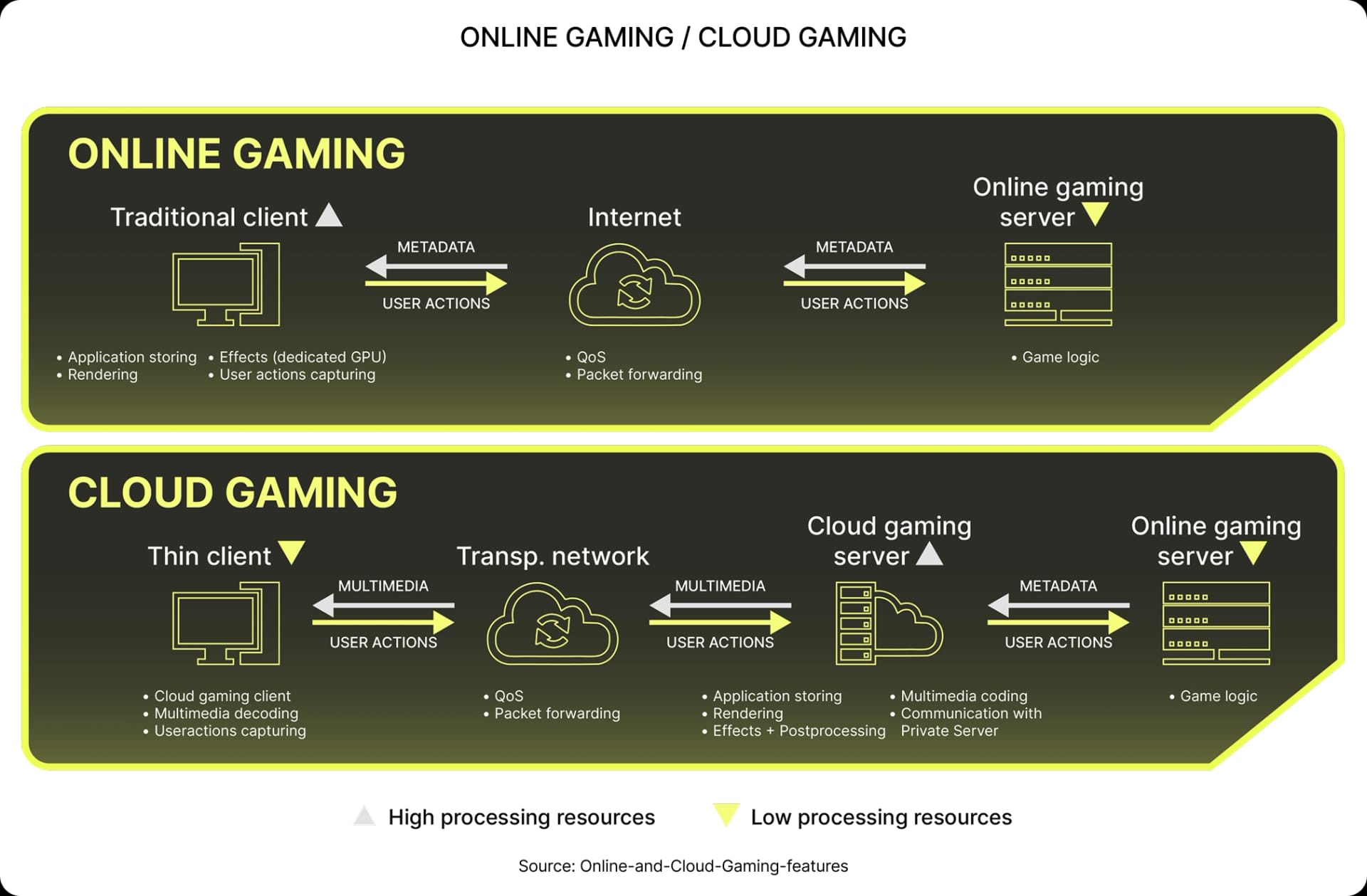
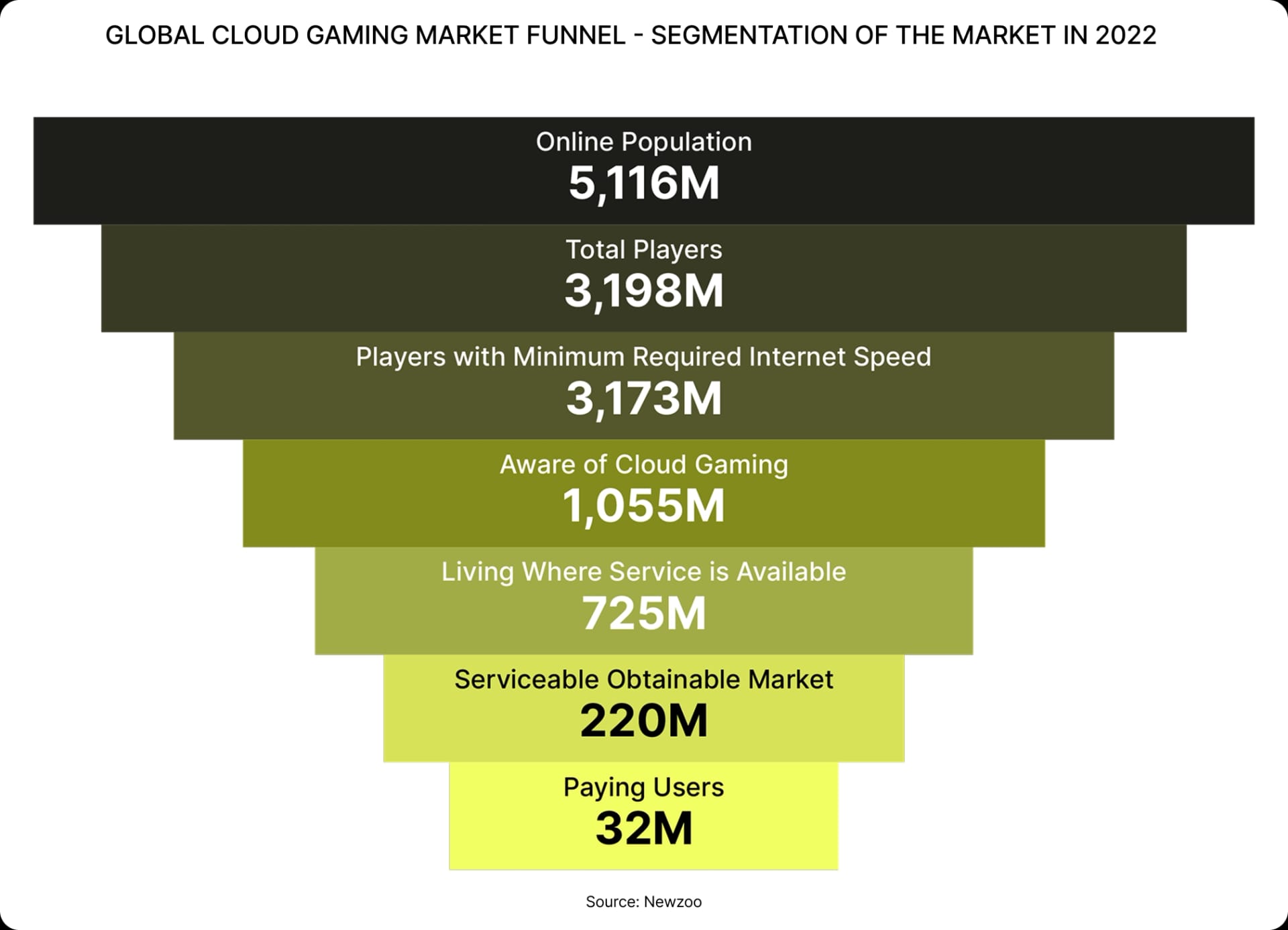
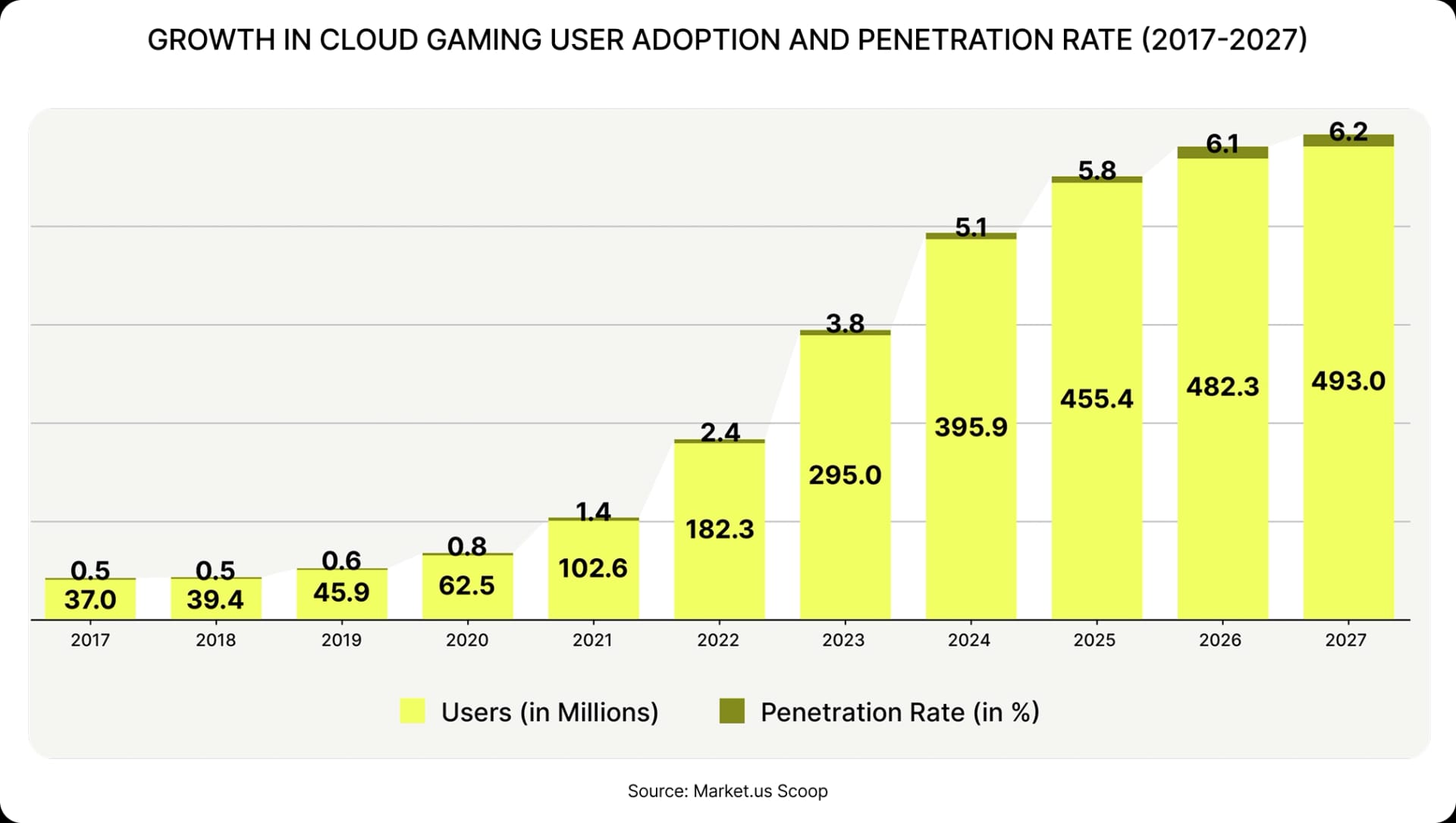
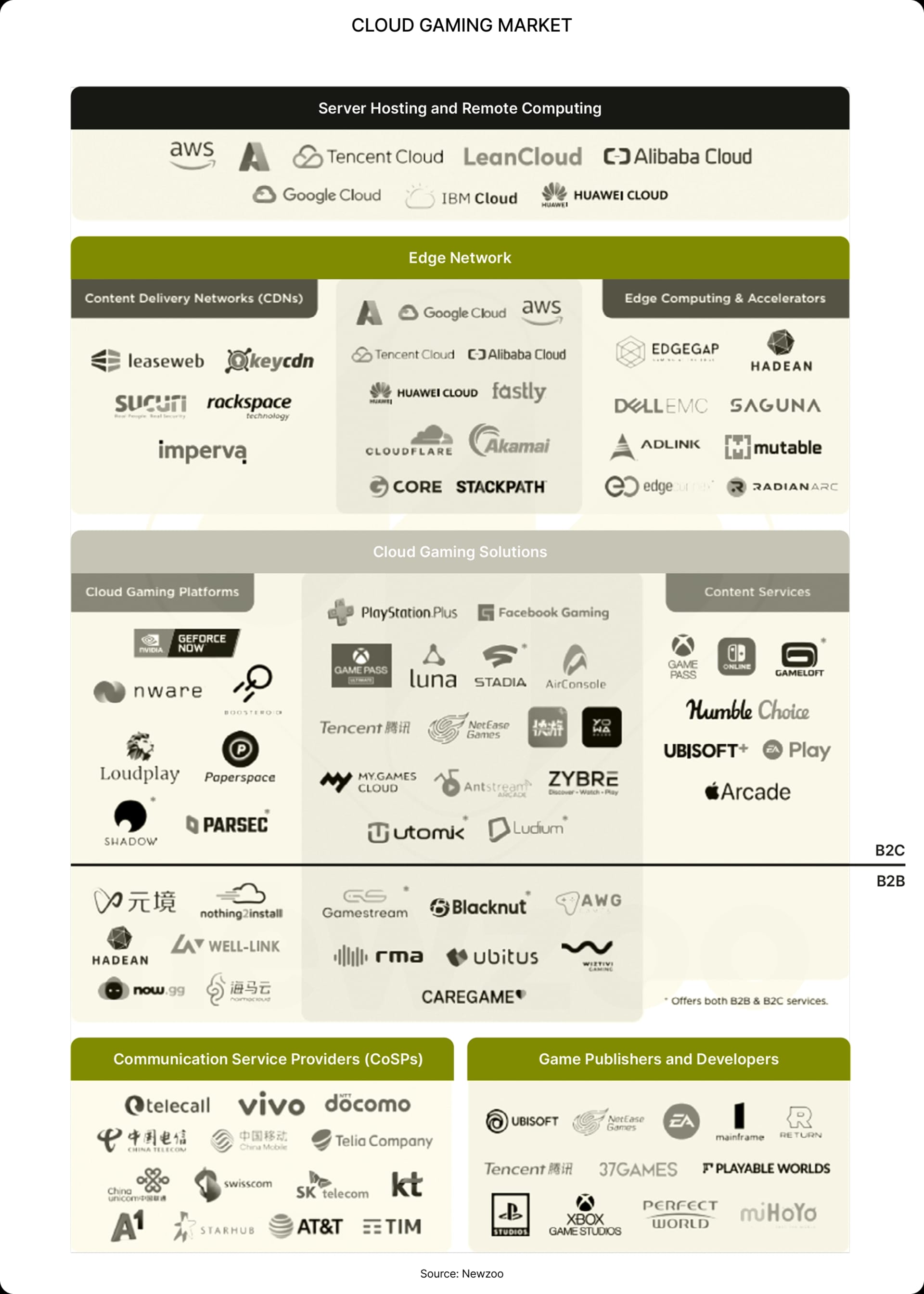
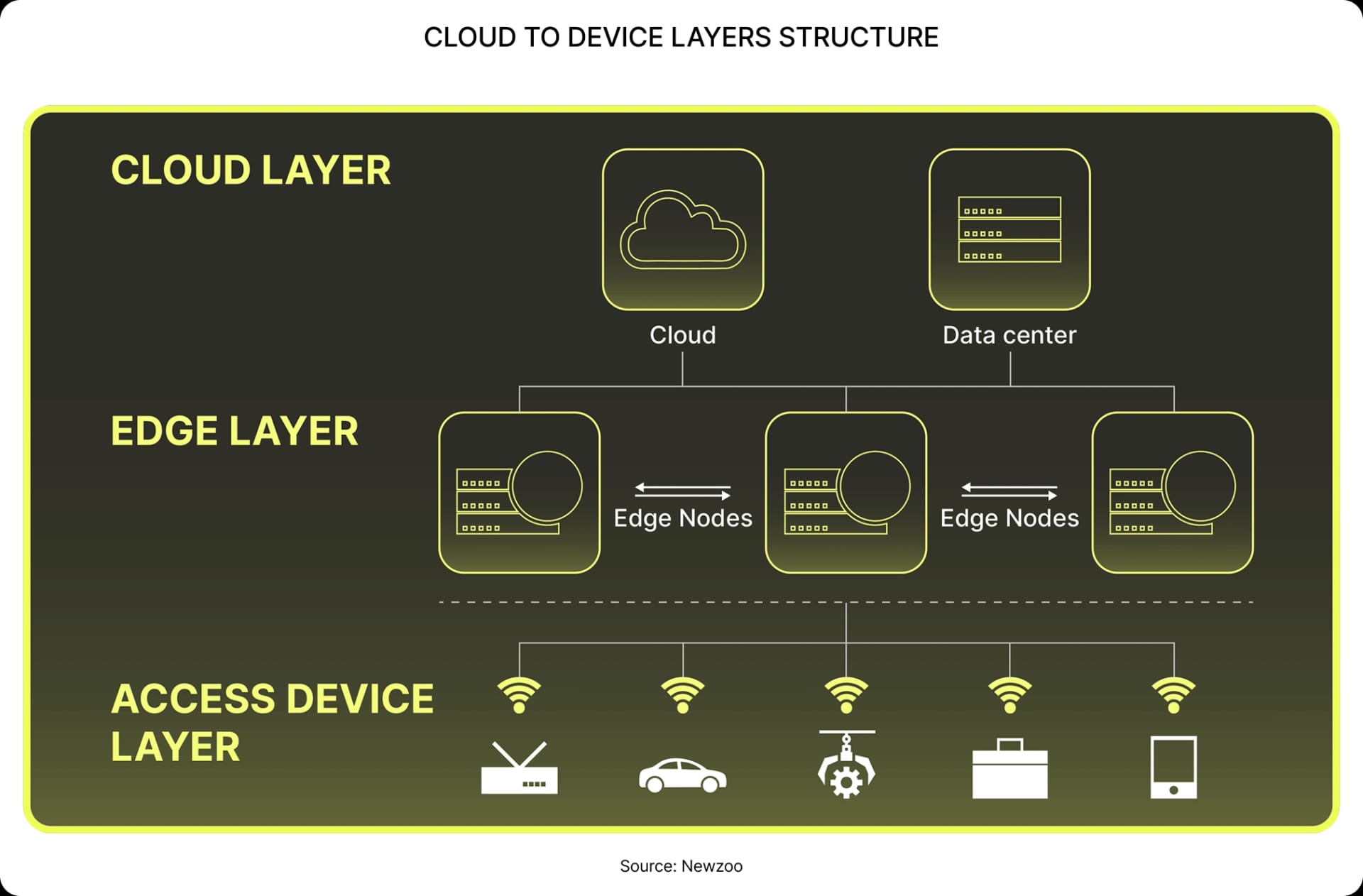
These two business models are supported by a broader ecosystem of providers, with the most critical being data centres and edge networks. To serve users, operators rely on a hybrid of large-scale data centres and regional edge servers. Data centres provide scale, while edge facilities reduce latency in urban areas.
This setup improves responsiveness but remains inefficient: each session requires a dedicated GPU, leading providers to overprovision for peak demand and leaving hardware underutilised during off-peak hours. Extending edge capacity to less dense regions is also costly, resulting in uneven service quality.
AI-Ready Gameplay Data Market
Alongside its traditional business model, cloud gaming creates an additional layer of value. Beyond entertainment, it generates a rare by-product: video streams synchronised with real-time player inputs. These control-annotated datasets are highly sought after for AI development.
In robotics, they provide sequential decision-making signals, while in generative media, they supply behavioural data that improves realism. This combination makes gameplay streams significantly more useful than raw video alone.
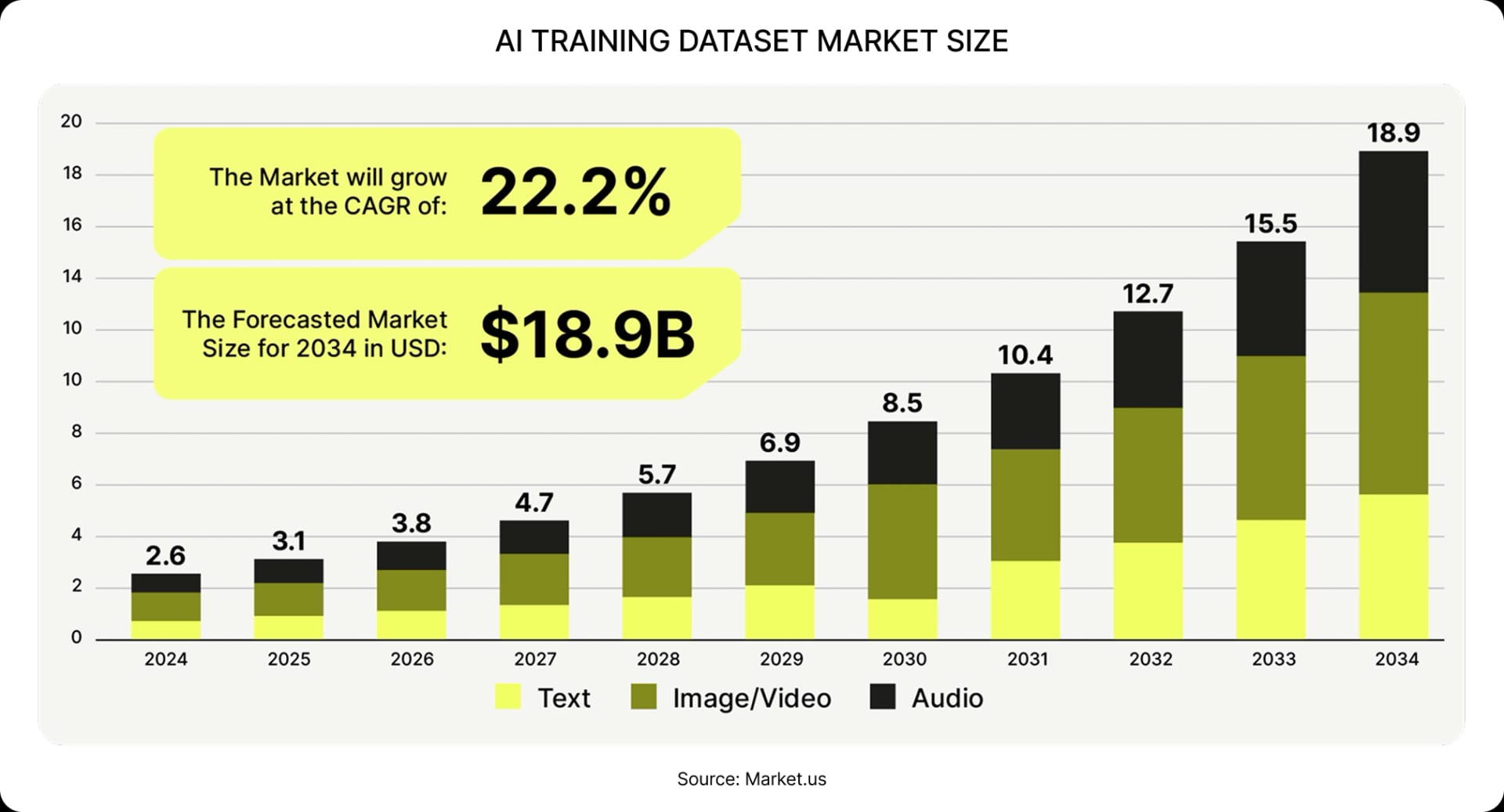
The rise of AI has created fierce competition for unique datasets, as companies look for any edge in training their models. This surge in demand has pushed the training data market to around $2.6 billion in 2024, with forecasts suggesting it could reach $12.7 billion by 2032.
Pricing benchmarks from providers such as Defined.ai show rates of $100-$300 per hour for well- annotated video with control metadata, with even higher prices for exclusive or richly tagged streams.
Shaga’s architecture is designed to capture and monetise this opportunity. With an opt-in model, players can resell anonymised gameplay data, turning a by-product into a high-margin revenue stream.
This creates a circular economy: players enjoy cheaper sessions, node operators earn from both compute and data resale, and AI developers gain reliable access to premium datasets. Together, these dynamics make Shaga’s business model far more sustainable.
Business Model Comparison
To understand where Shaga fits, it is useful to contrast the three main approaches to cloud gaming. Subscription libraries, bring-your-own-game platforms, and decentralised peer-to-peer networks each solve the same problem in different ways.
Lining them up on cost, latency, and monetisation reveals why Shaga’s model points toward a potentially superior path.
BUSINESS MODEL COMPARISON [UPDATE CHART]
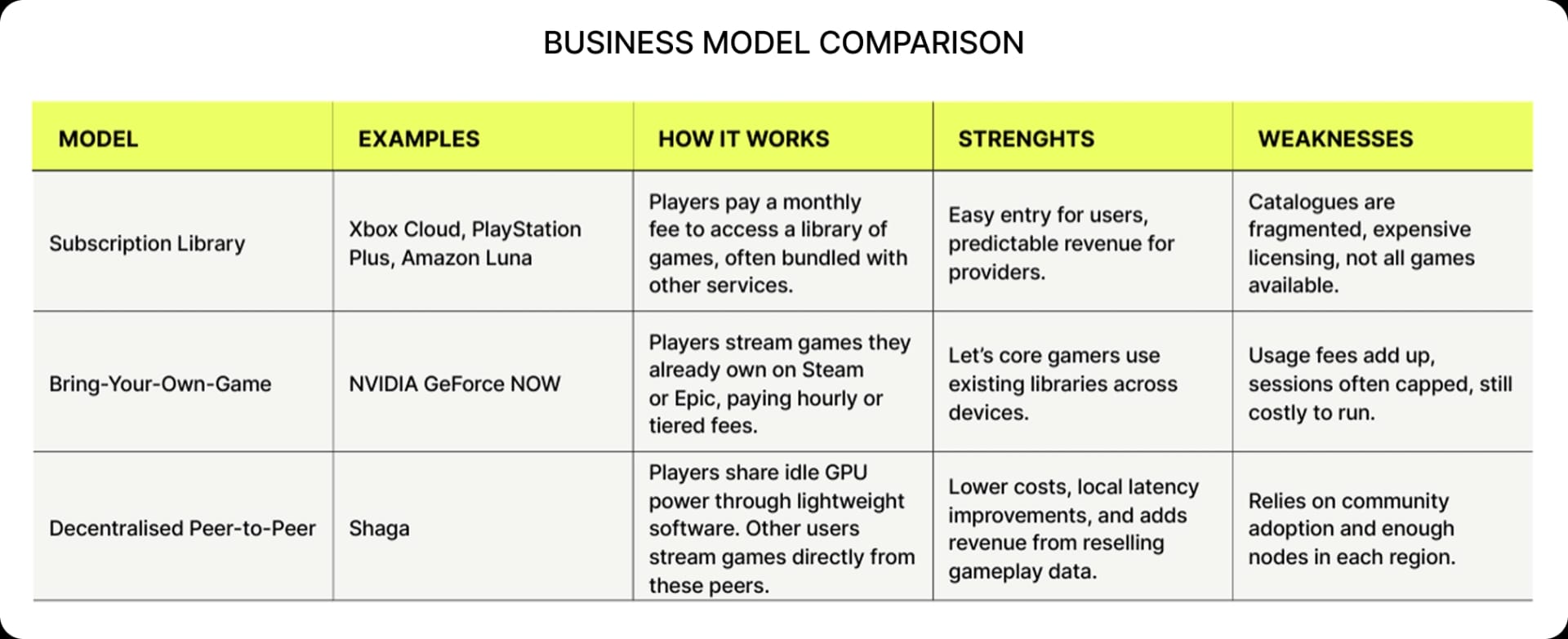
When viewed side by side, the comparison highlights a clear gap in the market. Subscription and BYO- game services are weighed down by licensing costs and infrastructure overhead, while smaller startups lack the scale or consistency to compete seriously.
Shaga, if it can scale its peer-to-peer network, offers a model with lower costs and reduced latency that could provide a superior alternative to both established incumbents and emerging challengers.
Download the full report here
Download the "From Idle GPUs to Global Infrastructure: The Shaga Model" report here (PDF)