




Introduction
Through Q3 2024, the decentralised finance (DeFi) ecosystem experienced a turbulent journey. Anticipation was high for another ‘DeFi Summer,’ fueled by significant catalysts such as the fourth Bitcoin halving, the approval of spot ETFs for Bitcoin and Ethereum, and a surge in on-chain liquidity and yield opportunities. While the first half of the year met expectations — Bitcoin reached new all-time highs and a wave of airdrops reignited market enthusiasm — the latter half has been characterized by increased volatility and tempered growth. This report examines the events of the past quarter, highlighting DeFi’s resilience in the face of these challenges and exploring what lies ahead for the industry.
The Stress Test: DeFi’s performance during the market meltdown
Following a strong first half with Bitcoin’s rise to a new all-time high, financial markets faced their first test of volatility in early August 2024. A convergence of negative factors triggered sharp sell- offs across both equity and crypto markets. Rising unemployment data fueled recession fears, the unwinding of the yen carry trade added pressure, and escalating geopolitical tensions intensified market jitters. On August 5th, volatility reached extreme levels and erased nearly $400 billion in value from the crypto market alone.
In the face of this turmoil, DeFi protocols not only survived but demonstrated remarkable resilience, functioning as intended without any major disruptions. This resilience underscores DeFi’s antifragility — a system that grows stronger under stress and adapts to challenges, highlighting its potential to disrupt traditional finance (TradFi).
Lending: Automated liquidations safeguarded lenders’ principal
In DeFi, lending is enabled by overcollateralization and decentralised liquidations, mechanisms that protect lenders from bad debt or borrower defaults. To ensure repayment, borrowers must provide collateral worth more than the loan itself. If the borrower fails to repay, or if the value of their collateral falls below a certain threshold, the loan is liquidated. Unlike TradFi, where liquidations are handled through legal processes and trusted intermediaries, DeFi liquidations happen instantly and are executed by anonymous liquidators. These liquidators are incentivized to repay the loan in exchange for a profit, meaning liquidators swiftly and effectively prevent bad debt accumulation.
Liquidations are common in DeFi, especially during periods of high market volatility. During the global market meltdown in early August, the total crypto market cap shed 7%, wiping out $162 billion in value. At the same time, over $300 million in liquidations occurred across major DeFi lending platforms like Aave, Compound, and MakerDAO’s Spark protocol. These protocols efficiently processed liquidations, preventing any significant accumulation of bad debt and generating significant revenues for their treasuries. In a single day, Aave alone processed $237 million in liquidations, generating $6 million in revenue.
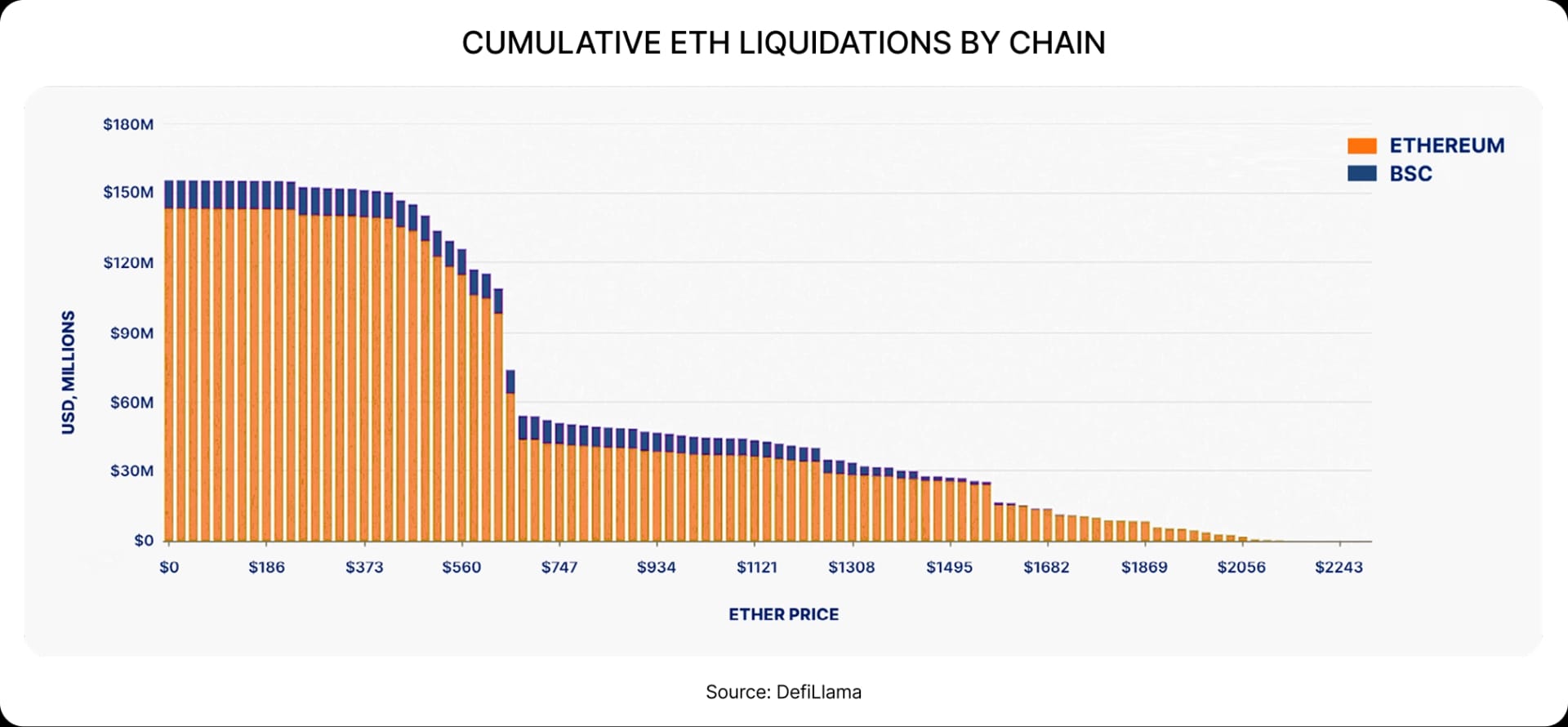
Despite these actions protecting lenders’ capital, liquidations can have significant downsides for borrowers. While liquidations are necessary to prevent bad debt, they can also negatively impact borrowers if collateral is prematurely liquidated. Liquidations often have a cascading effect on collateral prices, pushing prices lower during the sell-off, which in turn forces more liquidations. For instance, at an ETH price of around $655, more than $70 million worth of ETH collateral becomes liquidatable. If this price is breached, the resulting liquidations would add further selling pressure, pushing ETH prices down further and triggering additional rounds of liquidation. However, those prices can rebound sharply once the liquidations are complete. Thus, borrowers not only lose their collateral but may also need to buy it back at a higher price, compounding their losses.
However, DeFi liquidation mechanisms are evolving to be more borrower-friendly. New protocols like Curve’s LlamaLend, Fluid, and Euler V2 offer innovative approaches resulting in less disruptive liquidations.
- Curve’s LlamaLend employs soft liquidations, gradually converting a borrower’s collateral into stablecoins rather than liquidating it all at once. This helps borrowers avoid sudden losses during market volatility.
- Euler V2 introduces a modular framework, with independent vaults for each asset, allowing for customized risk management and more efficient liquidation processes.
- Fluid adds another layer of innovation with its tick-based system, grouping users’ collateral and debt into ranges to enable seamless liquidations across multiple users at once.
These advancements in liquidation mechanisms aim to minimize borrower disruption while maintaining the protection of lenders’ principal. When lenders feel confident their capital is secure, they are more likely to supply liquidity. This increased liquidity further enhances the borrowing experience, as borrowers can access more funds, which drives higher utilization of the lent assets. Higher utilization leads to increased interest rates, ultimately benefiting liquidity providers (LPs) with improved yields. By continuously refining the experience for both lenders and borrowers, DeFi protocols can attract more capital, boost activity, and foster a healthier, more profitable ecosystem for all participants.
Market Making: Price curves adjusted seamlessly, depegs corrected
Decentralised exchanges (DEXs) like Uniswap and Curve remained fully operational during the early August selloff, showing the resilience of the Automated Market Maker (AMM) model. AMMs allow for automatic trading of digital assets without the need for traditional order books, using mathematical formulas to adjust token prices based on the ratio of assets in the pool. Despite the increase in market volatility, DEXs experienced no downtime, and their AMM systems smoothly adjusted price curves to account for the rapidly changing market conditions.
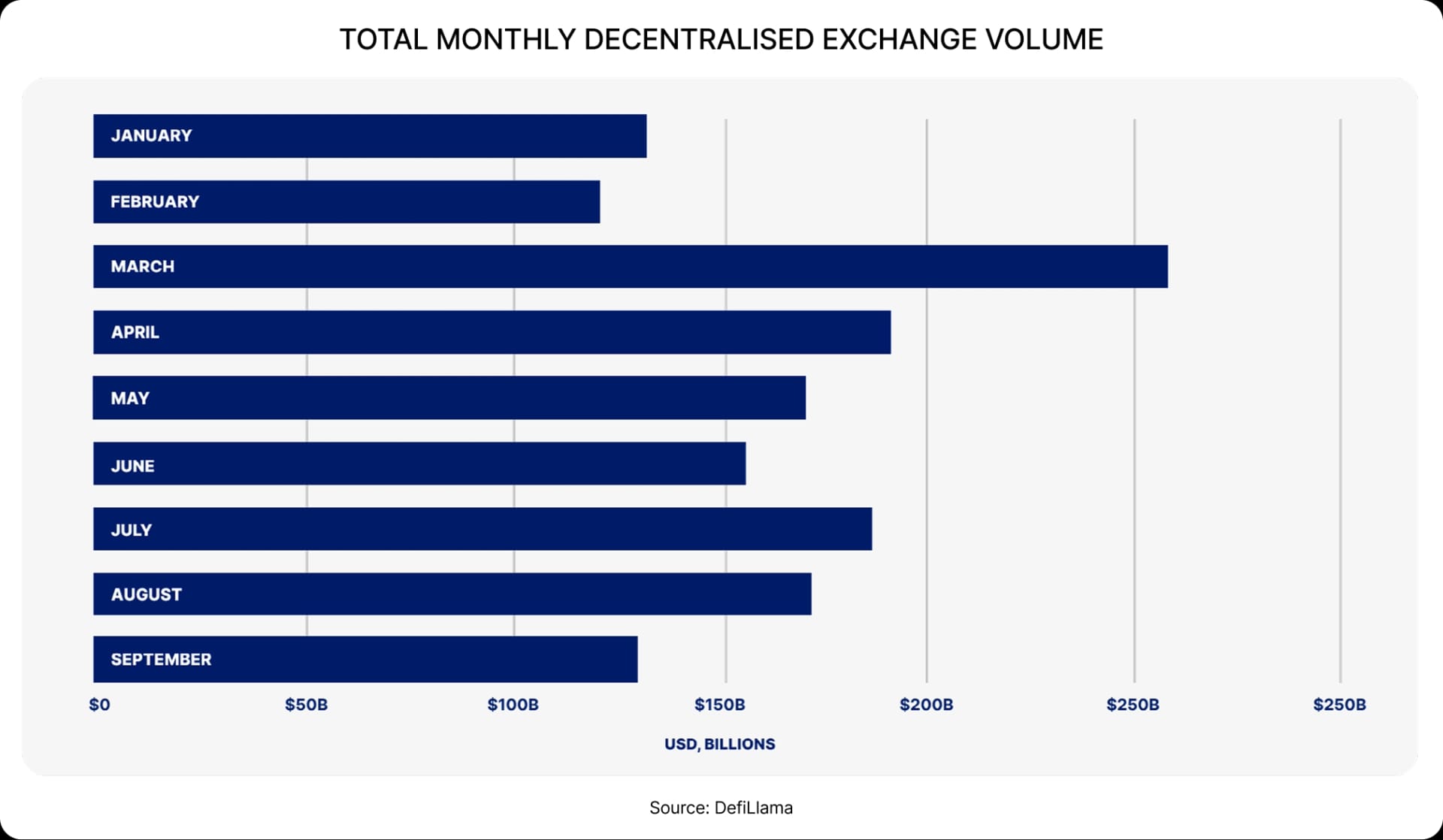
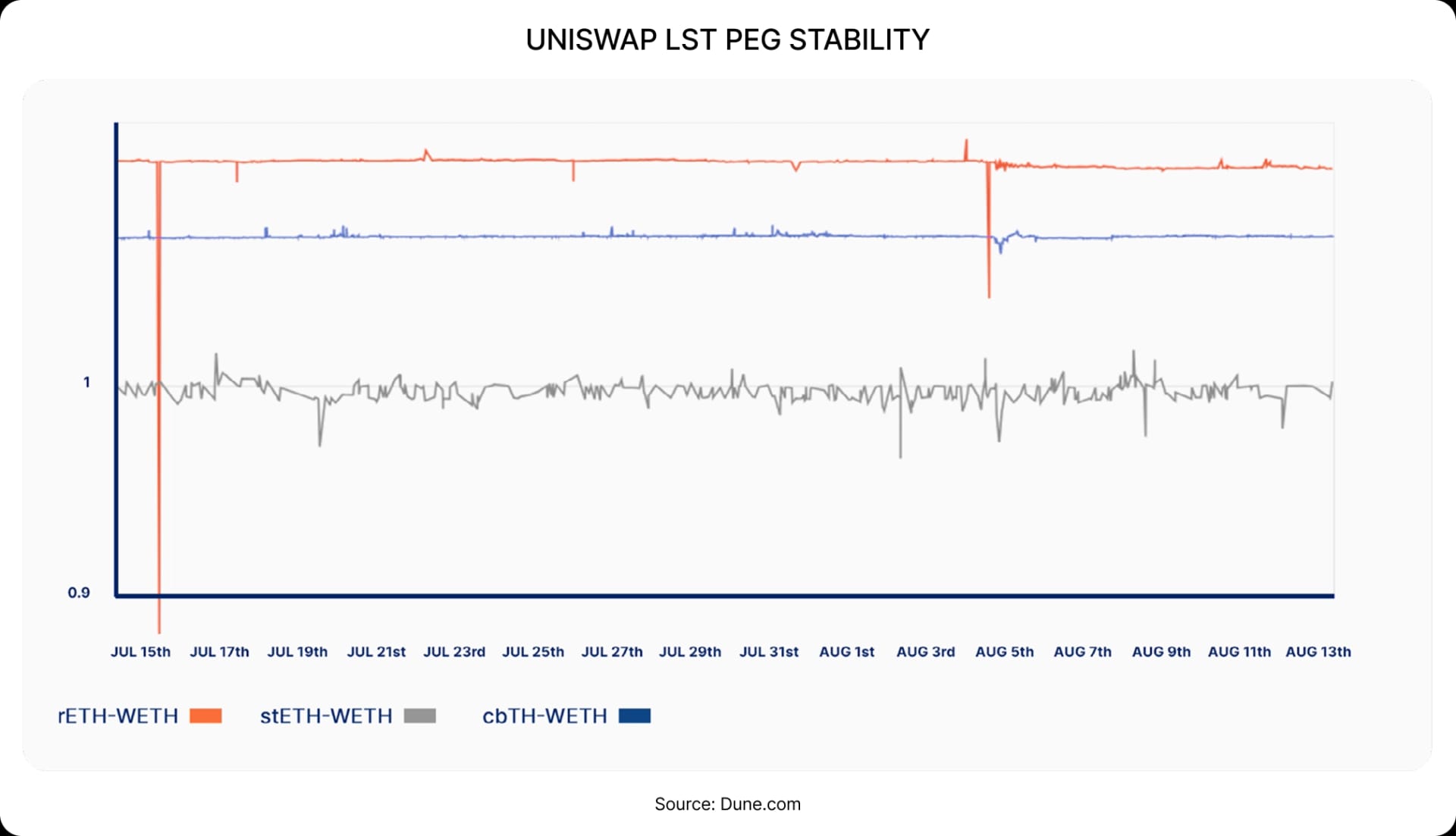
Currently, most pools on DEXs have a fixed fee structure, with different tiers depending on the type of asset (e.g. low fees for stablecoin pairs, high fees for more volatile assets). This static model limits the ability of LPs to adapt to changing market conditions. Dynamic fees, a new feature proposed in Uniswap V4, would have enabled LPs to benefit from the August volatility by automatically charging higher swap fees. This would allow LPs to capture more value, offsetting potential IL. During calmer periods, the fees would then lower, thus encouraging more trading activity. By optimizing returns across different market conditions, dynamic fees provide a more balanced experience for LPs.
Staking: Increased activity boosted fees and yields
On Ethereum and other Proof-of-Stake (PoS) networks, validators earn rewards by performing execution tasks like validating transactions and creating new blocks. These rewards are directly influenced by network activity, particularly the demand for block space. Validators earn additional fees (“tips”) when users want to expedite their transactions, as well as capture Maximal Extractable Value (MEV) opportunities, a growing trend in staking. MEV refers to profits extracted by reordering, including, or excluding transactions within a block. Searchers—bots that identify and exploit these opportunities—share MEV with validators. Some common MEV strategies include:
- Frontrunning: Identifying a profitable trade before execution and submiting an order first with a higher gas fee.
- Arbitrage: Exploiting price differences between DEXs to profit from quick trades. If two DEXs list the same token at different prices, searchers can buy the cheaper one and sell it on the other DEX.
- Liquidation: Claiming liquidation fees from borrowers whose collateral value fluctuates, forcing a sell-off to repay lenders.
Staking rewards increase in direct proportion to network activity—the more transactions, the greater the fees and MEV rewards. This was evident in early August when market volatility surged, driving up on-chain activity. On Ethereum, gas fees briefly spiked to over 50 gwei (approximately $0.85) from the average baseline of 7 gwei (roughly $0.12). This increase in gas fees translated directly into higher yields for stakers as validators captured more fees, reinforcing staking’s role as a foundational yield-generating mechanism within DeFi.
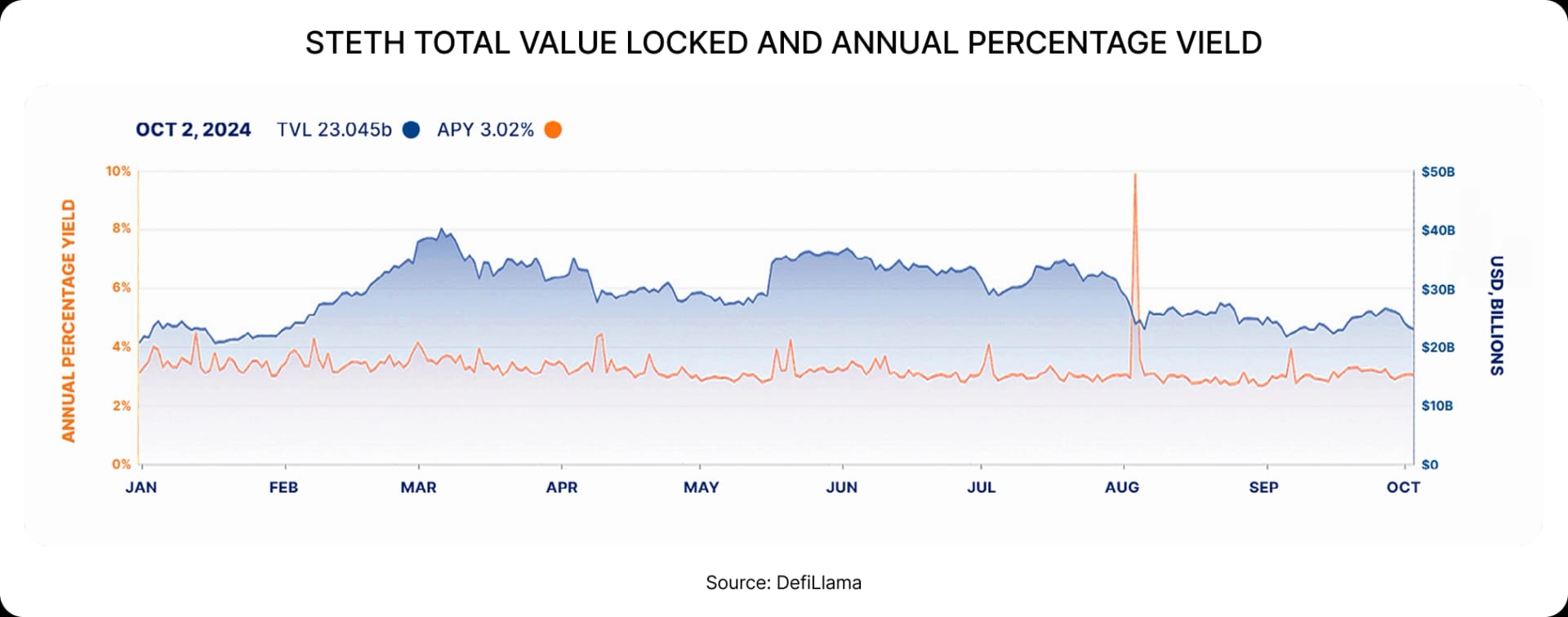
Moreover, ETH staking yields serve as a baseline for yield across DeFi. For example, lending rates are benchmarked against staking yield in DeFi. Since lending involves additional risks, DeFi protocols typically offer higher rates than staking to remain competitive. If lending rates drop lower, investors could borrow from DeFi apps, stake the borrowed funds, and profit from the yield difference. This dynamic helps anchor lending rates in DeFi and provides a floor for yields across the broader ecosystem.
Bridging: Cross-chain liquidity remained robust
Cross-chain bridges—essential infrastructure for enabling the transfer of assets across different blockchain networks—operated smoothly despite the market stress. Bridges like Across and Stargate, two of the leading protocols in the space, continued to facilitate high volumes of asset transfers without liquidity shortages or significant delays, ensuring that users could move their funds freely and efficiently.
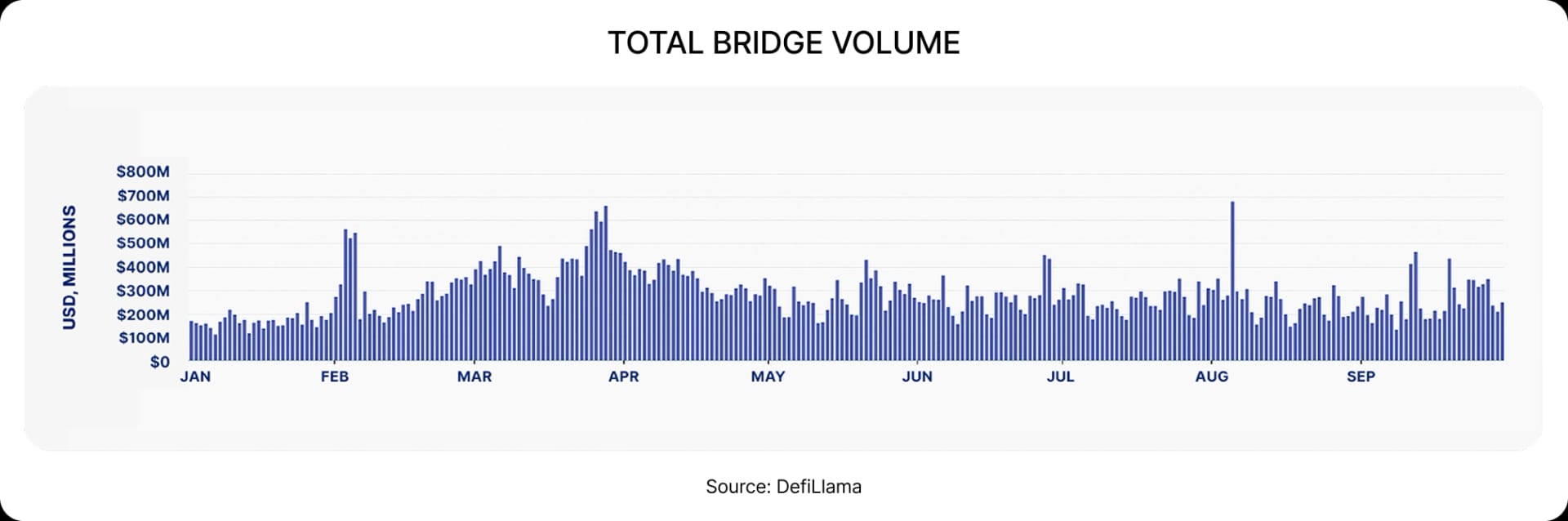
Bridging volume spiked to $678 million on August 5th, according to DefiLlama, as users and arbitrageurs moved assets across chains to capitalize on price discrepancies and liquidity opportunities. This spike in activity was driven by the need to reposition assets during the market turbulence. The ability of bridges to handle this sudden influx of activity without disruption speaks to their growing robustness and importance within the broader DeFi ecosystem.
One of the biggest challenges of cross-chain bridges is maintaining liquidity across multiple networks simultaneously. During times of high market activity, liquidity shortages can happen on one side of the bridge, causing delays or even failures in moving assets. However, recent innovations have helped solve this issue:
- Across uses a unified liquidity pool on Ethereum’s main network. Instead of needing separate pools of assets for each blockchain, Across keeps most of its liquidity in one place and only moves funds to other networks when needed. This allows Across to react quickly and send liquidity to where it’s needed most, preventing shortages and keeping fees low.
- Stargate’s V2 protocol introduces a new system that dynamically moves liquidity where it’s needed using an AI-driven tool called the AI Planning Module (AIPM). AIPM constantly monitors the liquidity on each network and adjusts fees and rewards to incentivize balanced liquidity across chains.
In the long run, as DeFi continues to evolve and more Layer 2 solutions and alternative Layer 1 chains emerge, the role of cross-chain bridges will only become more critical. Ensuring that liquidity flows freely across chains, regardless of market conditions, is essential to maintaining the efficiency and interconnectedness of the DeFi ecosystem.